
Blogs
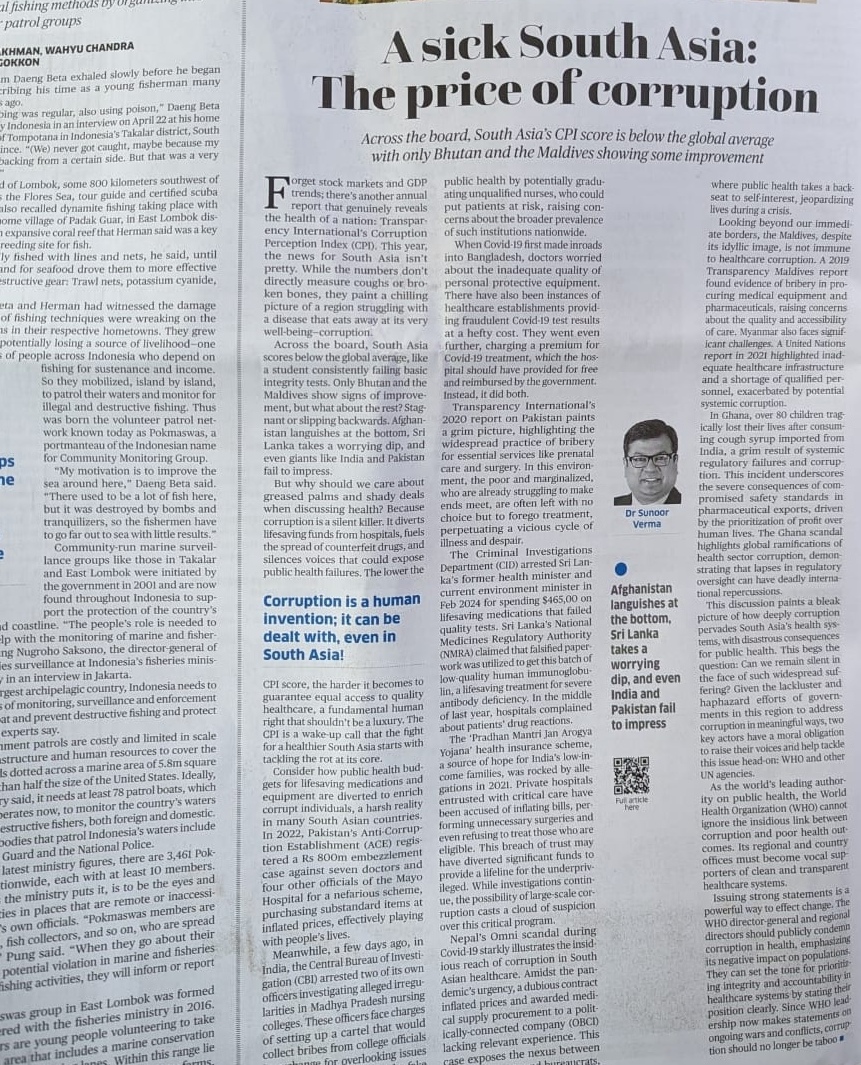
A sick South Asia: The price of corruption
Forget stock markets and GDP trends; there’s another annual report that genuinely reveals the health of a nation:
Corruption Perception Index (CPI). This year, the news for South Asia isn’t pretty. While the numbers don’t directly measure coughs or broken bones, they paint a chilling picture of a region struggling with a disease that eats away at its very well-being – corruption., like a student consistently failing basic integrity tests. Only show signs of improvement, but what about the rest? Stagnant or slipping backwards.
Consider how public health budgets for lifesaving medications and equipment are diverted to enrich corrupt individuals, a harsh reality in many South Asian countries. In 2022, Pakistan’s Anti-Corruption Establishment (ACE) registered a Rs 800 million embezzlement case against seven doctors and four other officials of the Mayo Hospital for a nefarious scheme, purchasing substandard items at inflated prices, effectively playing with people’s lives.
Meanwhile, a few days ago, in India, the Central Bureau of Investigation (CBI) arrested two of its own officers investigating alleged irregularities in Madhya Pradesh nursing colleges. These officers are accused of setting up a cartel that would collect bribes from college officials in exchange for overlooking issues and granting clean chits. The fake nursing college scandal in Madhya Pradesh, India, undermines public health by potentially graduating unqualified nurses who could put patients at risk, raising concerns about the broader prevalence of such institutions nationwide.
When COVID-19 first arrived in adjacent Bangladesh, doctors worried about the inadequate quality of personal protective equipment. There have also been instances of healthcare establishments providing fraudulent COVID-19 test results at a hefty cost. They went even further, charging a premium for Covid-19 treatment, which the hospital should have provided for free and reimbursed by the government. Instead, it did both.
2020 report on Pakistan paints a grim picture, highlighting the widespread practice of bribery for essential services like prenatal care and surgery. In this environment, the poor and marginalized, who are already struggling to make ends meet, are often left with no choice but to forego treatment, perpetuating a vicious cycle of illness and despair.
The Criminal Investigations Department (CID) arrested Sri Lanka’s former health minister and current environment minister in February 2024 for spending $465,00 on lifesaving medications that failed quality tests. Sri Lanka’s National Medicines Regulatory Authority (NMRA) claimed that falsified paperwork was utilized to get this batch of low-quality human immunoglobin, a lifesaving treatment for severe antibody deficiency. In the middle of last year, hospitals complained about patients’ drug reactions.
The ‘Pradhan Mantri Jan Arogya Yojana’ health insurance scheme, a source of hope for India’s low-income families, was rocked by allegations in 2021. Private hospitals entrusted with critical care have been accused of inflating bills, performing unnecessary surgeries, and even refusing to treat those who are eligible. This breach of trust may have diverted significant funds to provide a lifeline for the underprivileged. While investigations continue, the possibility of large-scale corruption casts a cloud of suspicion over this critical program.
Nepal’s Omni scandal during COVID-19 starkly illustrates the insidious reach of corruption in South Asian healthcare. Amidst the pandemic’s urgency, a dubious contract inflated prices and awarded medical supply procurement to a politically connected company (OBCI) lacking relevant experience. This case exposes the nexus between politics, business, and bureaucrats, where public health takes a backseat to self-interest, jeopardizing lives during a crisis.
Looking beyond our immediate borders, the Maldives, despite its idyllic image, is not immune to healthcare corruption. A 2019 Transparency Maldives report found evidence of bribery in procuring medical equipment and pharmaceuticals, raising concerns about the quality and accessibility of care. Similarly, Myanmar faces significant challenges. A United Nations report in 2021 highlighted inadequate healthcare infrastructure and a shortage of qualified personnel, exacerbated by potential systemic corruption.
In Ghana, over 80 children tragically lost their lives after consuming cough syrup imported from India, a grim result of systemic regulatory failures and corruption. This incident underscores the severe consequences of compromised safety standards in pharmaceutical exports, driven by the prioritization of profit over human lives. The Ghana scandal highlights the global ramifications of health sector corruption, demonstrating that lapses in regulatory oversight can have deadly international repercussions.
This discussion paints a bleak picture of how deeply corruption pervades South Asia’s health systems, with disastrous consequences for public health. This begs the question: can we remain silent in the face of such widespread suffering? Given the lacklustre and haphazard efforts of governments in this region to address corruption in meaningful ways, two key actors have a moral obligation to raise their voices and help tackle this issue head-on: WHO and UN agencies.
ambivalence on corruption and reluctance to highlight how privatization of health services harms public health outcomes has not helped either. The evidence for this correlation has long been available, but there has been no effective advocacy by the global custodian of health. South Asian lawmakers and their families frequently own private hospitals, medical colleges, nursing homes, and schools. It is clear where they would stand in the privatization of health debate.
should advocate, in particular, with those international finance institutions constantly pushing for lower public-sector health spending and see privatization as the first line of treatment for failing healthcare systems.
enters into three to five-year country cooperation agreements with host governments to outline the agreed-upon work plan. Corruption in the healthcare sector should be a vital component of this agreement with allocated funds. Without this, the #Afghanistan #Bhutan #Bangladesh #Maldives #Myanmar #Nepal #Pakistan #SriLanka #India #Corruption #Health #WHO #UN #South Asia #Transparency #GobalHealth #GlobalHealthDiplomacy
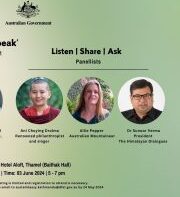
“You? A man?” – A conversation on menopause in Kathmandu
was, walking into the meeting hall for the ‘s “Menopause to Meno-peak” seminar, when I bumped into an acquaintance. Her greeting was as blunt as it was good-natured: “You? A man? On a menopause panel?” A fantastic start, I thought, for the lone male panelist on an all-star female team, especially considering the topic!
But any initial awkwardness melted away when I met my co-panelists. Ani Choying Drolma, the world-famous Buddhist Singing Nun, and The audience was just as inspiring—a diverse mix of activists, policymakers, politicians, lawyers, health experts, and media of all ages and genders. Their questions during the Q&A session were as sharp as they were insightful, sparking a truly dynamic exchange.
One particularly powerful moment came when Ani Choying Drolma shared her experiences with menopause. In many countries, faith and sexual and reproductive health are seen as opposing concepts. Ani’s courage in speaking openly highlighted the critical need for bridges between these areas. Her talk was a call to action, paving the way for partnerships to empower women on a deeper level.
The complexities of menopause and Nepal’s unique socio-economic context led to some interesting discussions about potential solutions. When invited to share my thoughts, here is what I offered at different levels on the way forward. Some short-term and some more long-term:

India's 2024 election: Seven promising trends
The Indian general elections of 2024, as always, are a spectacle of democracy on an epic scale. Here are seven remarkable trends that give me much hope as a citizen:
, India experienced good voter turnout over the summer months, with a considerable rise in participation from young people and first-time voters. This demonstrates a dynamic and engaged electorate eager to shape the country’s destiny. Young voters’ passion, in particular, indicates strong democratic involvement and a generational shift in political understanding and activism. The correlation between high temperatures and voter turnout is being studied and will hopefully guide future election scheduling.
, the 2024 Indian elections were a technological miracle, demonstrating how cutting-edge innovations can strengthen the democratic process and make it more transparent, secure, and efficient. Blockchain technology was used for voter registration for the first time, making it safe and tamper-proof. This enables voters to check their registration status using a blockchain-based app, preventing voting fraud. AI was also essential for election monitoring. AI algorithms analysed social media in real-time to flag disinformation and hate speech, ensuring a fair and peaceful election. AI-powered facial recognition confirmed voter identities at polling stations, speeding up and decreasing impersonation. Each polling location used electronic voting devices with voter-verifiable paper audit trails. This combination allows voters to validate their vote using a paper slip, improving electronic voting transparency and trust.
, these elections marked a significant step towards inclusivity, with a notable increase in women and candidates from marginalized communities contesting seats. According to the Election Commission of India, the number of women candidates rose 10% compared to the previous election. Moreover, candidates from Scheduled Castes, Scheduled Tribes, and other marginalized communities made significant inroads, highlighting a shift towards a more inclusive political landscape that better reflects India’s diverse demographic composition.
, the 2024 elections marked a groundbreaking shift towards environmental consciousness, making them the greenest in the nation’s history. The effort to reduce the environmental impact was evident across various facets of the electoral process. Political parties embraced digital platforms, significantly cutting down on paper use. Social media, mobile apps, and SMS campaigns replaced traditional posters, pamphlets, and flyers, drastically reducing the carbon footprint. When physical materials were necessary, eco-friendly alternatives took centre stage. Biodegradable banners, recyclable pamphlets, and natural dye inks became the norm. Several parties distributed seed paper pamphlets that voters could plant, symbolizing growth and sustainability.
Solar panels and other renewable energy sources powered polling stations, especially in remote areas. This ensured reliable power and underscored a commitment to sustainable practices. Campaign travel and logistics significantly shifted towards electric vehicles (EVs). Political leaders and campaign teams used EVs to minimize carbon emissions. Public transport incentives further supported this move, including discounted fares on election day for voters using electric taxis and buses.
, these elections made remarkable strides in ensuring every eligible voter could exercise their right to vote, regardless of physical ability or location. With about 2.21% of the population living with disabilities and many more facing mobility challenges, these efforts were crucial. The Election Commission of India took comprehensive measures to facilitate voting for people with disabilities, senior citizens, and those in remote areas. Mobile polling stations reached distant locations, and accessible voting equipment, like braille-enabled EVMs and ramps, became more common. India’s rapidly improving infrastructure played a key role. Better all-weather roads, enhanced public transportation networks, and wheelchair-accessible taxis made reaching polling stations easier for voters with mobility challenges. All these reflect a commitment to an inclusive democracy and set a new benchmark for accessibility and participation in the electoral process.
, despite ongoing tensions and disturbances in some parts, the 2024 Indian elections were largely peaceful, with minimal incidents of violence or disruption. This success is a testament to the dedication and bravery of India’s invisible administrative personnel and security servicemen and women. Their effective planning and coordination with law enforcement agencies ensured the elections could proceed smoothly, even in volatile areas. These unsung heroes worked tirelessly, often behind the scenes, to maintain peace and order, allowing voters to exercise their democratic rights safely. Ensuring that these services remain non-political, are incentivised appropriately and recognised is critical for the country’s democracy.
, the 2024 elections in India showcased the remarkable impact of having a stable majority government, leading to enhanced efficiency and effectiveness across various sectors. This was evident in how all ministries utilized their platforms, communication channels, and capabilities to the fullest to encourage voter participation, turning the elections into a grand celebration of democracy. In contrast, in India’s experience and neighbourhood, coalition governments often result in two steps forward and two steps back, if not three, due to their inherent instability and conflicting interests. The synergy between the government and corporate sector in driving voter education campaigns in 2024 also exemplifies how a stable government can enhance national initiatives, contributing to the vibrancy of India’s democracy.
Highlighting the positive aspects of India’s 2024 elections, the essence of “Sarvam Parartha Samgraha” rings true—’gather all learning for the greater good’. Despite the high transaction cost, especially for a diverse subcontinent-sized nation, India consistently bets on democracy in its long-term strategy. With innovation and a steadfast commitment to democratic values, the lessons from the 2024 elections can strengthen democracy in India and Bharat for generations to come.
Seven troubling trends in Indian elections 2024
As India votes in the 2024 elections, seven alarming trends that transcend party lines threaten the core of its democratic values and reflect systemic problems within the political sphere.
One of the most alarming tendencies in Indian politics today is accepting corruption as a necessary transaction cost.
Campaign conversations now revolve around the ‘decent’ per cent of kickbacks, indicating a broad acceptance of corruption. Across party lines, all major political parties have benefited from the electoral bonds system’s lack of transparency, which permits unlimited and anonymous donations, creating an environment conducive to corruption. Furthermore, recent corruption scandals involving officials from several political parties demonstrate the bipartisan nature of corruption.
Another alarming trend is the widespread acceptability of violence against women, both within and outside political parties. For example, India’s decorated female wrestlers protested harassment and sexual assault by a prominent politician by sitting on the pavements of Delhi for 4 months, 4 weeks and 1 day, before any serious inquiry was set up. Similarly, the tragic episode in Manipur in which women were paraded naked, as well as the big sex and video scandal in the opposition-ruled Karnataka state, highlight this troubling tendency. Furthermore, the current example of a female parliamentarian being allegedly abused at the home of Delhi’s Chief Minister, who also leads the country’s newest political party, highlights the rot. The absent or at best lethargic response of politicians to allegations of abuse by women showcases the systemic nature of the problem. Tragically this widespread acceptance of abuse stands in stark contrast to the hyper-targeted election campaigns by all parties vying for women’s votes.
Perhaps the most depressing trend is omitting critical nation-building issues like education, healthcare, and employment from the current election discourse. These fundamental issues are overlooked mainly by divisive rhetoric and populist promises. For example, in areas such as Uttar Pradesh and Bihar, political campaigns usually centre on caste and religion rather than tackling severe deficiencies in educational facilities and healthcare services. Similarly, in Maharashtra, while political disputes frequently revolve around regional identity and linguistic issues, the state continues to face farmer suicides and rural unemployment.
Despite electoral losses, Rahul Gandhi and Priyanka Gandhi Vadra remain influential in the Indian National Congress (INC). Regional dynastic politics is seen in Uttar Pradesh’s Samajwadi Party (SP), led by Mulayam Singh Yadav’s son Akhilesh. The Karunanidhi family controls Tamil Nadu’s Dravida Munnetra Kazhagam (DMK), with M.K. Stalin ruling after his father.
Not only established parties are affected. The Maharashtra Shiv Sena is likewise a family affair, with Uddhav Thackeray succeeding his father, Balasaheb Thackeray, and now his son, Aaditya. In Andhra Pradesh, the Reddy family dominates the Yuvajana Sramika Rythu Congress Party (YSRCP), with Y.S. Jagan Mohan Reddy trying to emulate his father. While the BJP has often criticized other parties, particularly the Congress, for dynastic politics, it has not been immune to the same practices. Nepotism within the BJP can be seen as a strategic move to consolidate power and ensure loyalty within the party ranks.
Indian politicians in power and opposition, frequently seek endorsements from abroad to validate their actions and ideas. This craving for international approval is evident in their eagerness to speak at prestigious universities and their emphasis on statements by world leaders that praise their initiatives. These are then highlighted in domestic media, projecting an image of global respect and intellectual recognition. However, this pursuit of international validation can obscure pressing domestic issues. Indian politicians’ reliance on foreign endorsements can divert attention from the critical issues that require urgent and sustained focus.
MLAs’ repeated floor-crossing has caused substantial political instability and governance issues in some states. This erosion of ideological loyalty erodes public trust and threatens the integrity of democratic institutions as voters increasingly struggle to rely on their elected leaders’ professed ideals.
The Sanskrit term Ātmānaṃ viddhi, or ‘Know thyself’, highlights the significance of deep self-awareness and introspection. It encourages a journey inside to find one’s actual nature and purpose. Perhaps Ātmānaṃ viddhi should be the united minimum programme of all political parties in India.
Holding leader's feet to the for women's empowerment
On International Women’s Day, leaders send hollow tweets, posts, and messages praising women’s empowerment. Cut through the noise and get to the point: are these leaders keeping their promises or faking them? When a male or female leader broadcasts a flowery message about women’s empowerment, ask them to answer my questions and then judge them. People say the proof is in the pudding.
Organizational leaders should report women’s representation across levels and answer why these percentages are low. Annual gender representation goals should be publicly posted. And feature in the annual corporate reports.
Act on wage equity instead of talking about it. Organizational leaders must disclose gender pay audits that identify and address discrepancies. Regulations like wage bands and standardized pay scales can reduce unconscious bias in compensation talks. Anything less is unacceptable.
Leaders must show they recruited diverse talent fairly and inclusively. Blind recruitment methods and diversity training for hiring managers prevent unconscious bias in the selection process. Furthermore, leaders should publicly state that they aggressively attract female leaders through focused recruitment.
Leaders must show they recruited diverse talent fairly and inclusively. Blind recruitment methods and diversity training for hiring managers prevent unconscious bias in the selection process. Furthermore, leaders should publicly state that they aggressively attract female leaders through focused recruitment.
Leaders who prioritize menstruation, nursing, and menopausal facilities show they understand and are committed to women’s unique challenges. Before offering free condoms in office restrooms, provide women’s hygiene products. Menstruation is not voluntary, but sex is!
Senior and sufficient women in any organizational redressal committee are essential for fair and successful workplace issue resolution. They are not just a matter of tokenism but a strategic need for workplace respect and accountability.
Happy Arch of the Aorta Day
In the wake of the COVID-19 pandemic, we witnessed an unprecedented surge in health communication efforts aimed at educating and mobilizing the public. While the importance of such #healthcommunication cannot be understated, there’s a growing concern of “health communication fatigue” as we risk overloading the public with information. In this article, I will explore the challenges of communication fatigue and offer strategies to ensure our messages effectively achieve public health objectives.
Much like the indiscriminate use of antibiotics can lead to unintended consequences, over-communicating health messages without a strategic approach can render our communication efforts ineffective. In the early days of the pandemic, organizations like
Indeed, it’s time to address the ever-expanding plethora of health days. We’ve come a long way from marking general health awareness days, and it seems like we’re on the brink of celebrating the “World Day of the Right Kidney” or perhaps the “Day of the Arch of the Aorta.” While raising awareness about specific diseases, organs, and behaviours is crucial, we must strike a balance. The constant barrage of dedicated days can dilute the impact and lead to a sense of exhaustion among the public. We must prioritize key health issues, combining awareness with concrete actions. Let’s not forget that meaningful change in public health is more about sustainable, well-thought-out strategies than having a day for every tiny medical detail. After all, there’s only so much room on the calendar, and we should use it wisely to ensure our messages hit home effectively.
#BehaviouralScience offers compelling insights into #MessageFatigue resulting from overcommunication. The human brain is inherently wired to adapt and filter information to efficiently process an overload of stimuli. When individuals are consistently bombarded with health messages and information, their attention span wanes, and their receptivity to new messages diminishes. This concept is known as habituation, a fundamental principle in psychology. When people encounter the same information repeatedly without novelty or a clear call to action, they become desensitized, rendering subsequent messages less effective. Additionally, cognitive load theory highlights that excessive information can overwhelm the brain’s limited mental resources, decreasing message retention and comprehension. To combat #messagefatigue, it is essential to apply behavioural science principles, such as novelty, relevance, and clarity, in health communication strategies, ensuring that messages are frequent, engaging, resonant, and actionable.
The primary challenge is balancing the need for information dissemination and the risk of communication fatigue. To do this effectively, we must prioritize and strategically choose critical health days for communication. Rather than inundating the public with continuous events and messages, we should focus on a select few that have the most significant impact in the context of each country’s morbidity and mortality data.
Similarly, before choosing the health day to mark and encourage the population to take action, check if you have created the necessary infrastructure and trained the health staff. Only talking and having no facilities supporting action will reduce the audience’s trust in you as a communicator. Let’s take a page from the Singaporean playbook, a country celebrated for its strategic approach to health campaigns. Unlike the chaotic flurry of information that can overwhelm public health communication efforts, Singapore opts for a more measured strategy. They first build the necessary infrastructure, invest in training their healthcare staff, and only then launch well-thought-out health campaigns. This method ensures that the communication aligns with the country’s capabilities and resources. For instance, their successful ‘War on Diabetes’ campaign was launched after setting up a nationwide system for diabetes prevention, care, and treatment. It’s a testament to how governments can measure health communication, focusing on sustainable actions over flashy announcements.
For low-income countries heavily reliant on foreign aid, public officials may focus excessively on marking health days prioritized by donors. This diverts their attention from core responsibilities and risks undermining domestic ownership and sustainability. Striking the right balance is essential and requires local health leadership to have a spine and be incorruptible.
#StrategicHealthCommunication is critical, especially in low-income nations with limited resources. It involves profoundly understanding the local context, target audience, and the cultural factors affecting health behaviours. Effective strategies include audience analysis, evidence-based messaging, channel selection, deliberate message distribution, and rigorous monitoring and evaluation
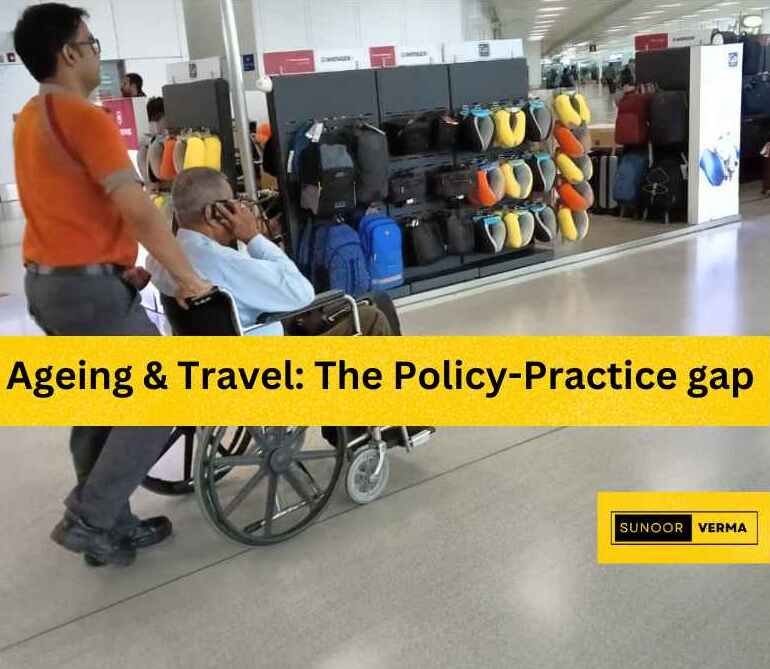
Ageing & travel: The policy-practice gap
I had come to see off my eighty-four-year-old uncle, who\ uses a wheelchair at Kathmandu’s Tribhuvan International Airport. He was flying to New Delhi. We had chosen to fly him with India’s premier airline,\
Kathmandu airport has two business lounges – the one managed by Radisson Hotel is a twenty-odd-step climb on the first floor. There are no elevators. Soltee Hotel operates the second lounge, which is on the ground floor. While the airline had booked a wheelchair for my uncle, it invited him to the first-floor lounge as it only had an agreement with the Radisson lounge. Forty minutes of discussion with three staff levels later,
finally agreed to make an exception and allow him to the ground floor lounge. Had I not persevered, my uncle would have been denied using a lounge he was entitled to because of his #age and #disability.had not used the prism of disability and ageing when deciding to make an exclusive contract with one lounge, while other international airlines operating out of Kathmandu hedge their bets and let passengers choose a lounge.Making policies and guidelines on disability and #ageing requires complex-multidimensional #advocacy and leadership communication. Ideally, the organizations would have an ageing and #disability focal point that would be empowered enough to examine all client-facing decisions of the organization through the ageing and disability lens. The Human Resources heads need to ensure that in their induction programs, disability and ageing are featured in the curricula.
Clearly articulated leadership communication on a company’s commitment to creating inclusive products is a must and needs to be frequently repeated. There are, of course, trailblazers-
, has spoken publicly about his commitment to making Microsoft products and services accessible to everyone. He believes that people with disabilities can significantly contribute to the workplace. Similarly, , has said that her firm is committed to creating a culture of equality where everyone can advance and thrive and making its products and services accessible.Soon, more airlines and airport operators will realize the economic imperative of using the ageing lens in business decisions. predicts that the number of people aged 65 years and older will increase from 1 billion in 2020 to 1.6 billion in 2050. Similarly, the number of older adults who travel internationally will increase from 100 million in 2015 to 260 million in 2030.Growing up, I have known my uncle as a confident person whose wit and swift decision-making always got him out of any tight spot. He has been a sportsman for the better part of his life. However, with age, I see irreversible changes which make airports and flights a challenge, especially when travelling alone.#Airports can be large and complex, with long distances, confusing signage, and crowds. Elderly passengers may have difficulty finding their way around, especially if unfamiliar with the airport. Trust in the person pushing your wheelchair is critical for not getting an anxiety attack. A pleasant surprise was the Special Assistance staff at Delhi’s IGIA airport. The gentleman pushing the wheelchair was experienced in dealing with elderly passengers and showed patience and compassion at every stage of the journey. This highlights the importance of appropriately recruiting and training staff dealing with elderly passengers.It is important to note that the needs of elderly passengers can vary depending on their circumstances. Airports and Airlines should be prepared to work with elderly passengers to identify and address their individual needs and train their staff to deal with elderly passengers. This includes training on how to identify and address the needs of elderly passengers and provide them with the best possible service.both recognize the importance of travel for older adults. Travel can allow older adults to stay active, learn new things, and connect with loved ones. However, it is crucial for older adults to be aware of the challenges they may face when travelling and to take steps to mitigate those risks.There are several things that older adults can do to prepare for travel, including:
Navigating menopause at work: A vital conversation
The gap between the global South and the global North is widening in mainstreaming #menstruation in public discourse. Conversations about menstruation are only now emerging from the shadows of stigma and taboo in many parts of the global South. It is still difficult for people in these areas to access menstrual hygiene products, adequate sanitation facilities, and menstrual education. For example, Women and girls in sub-Saharan Africa and South Asia often resort to using inadequate materials like rags, leaves, or even cow dung to deal with their periods. Health problems, missed days of work or school, and feelings of isolation worsen when people aren’t given the tools they need to succeed.
The global North has made progress in normalizing menstruation. Many North American and European countries encourage menstruation discussions in homes, schools, and the workplace. The UK and several European countries have menstrual leave rules that allow workers to take paid absence for severe period symptoms. People in the US are fighting to end the “pink tax” on period goods, and more companies are discussing menstrual health with their staff. Development, access to resources, and cultural attitudes about menstruation contribute to this North-South gap, emphasizing the need for global menstrual health and hygiene fairness.The global North has made progress in normalizing menstruation. Many North American and European countries encourage menstruation discussions in homes, schools, and the workplace. The UK and several European countries have menstrual leave rules that allow workers to take paid absence for severe period symptoms. People in the US are fighting to end the “pink tax” on period goods, and more companies are discussing menstrual health with their staff. Development, access to resources, and cultural attitudes about menstruation contribute to this North-South gap, emphasizing the need for global menstrual health and hygiene fairness.
The global North has made progress in normalizing menstruation. Many North American and European countries encourage menstruation discussions in homes, schools, and the workplace. The UK and several European countries have menstrual leave rules that allow workers to take paid absence for severe period symptoms. People in the US are fighting to end the “pink tax” on period goods, and more companies are discussing menstrual health with their staff. Development, access to resources, and cultural attitudes about menstruation contribute to this North-South gap, emphasizing the need for global menstrual health and hygiene fairness.
The global North has made progress in normalizing menstruation. Many North American and European countries encourage menstruation discussions in homes, schools, and the workplace. The UK and several European countries have menstrual leave rules that allow workers to take paid absence for severe period symptoms. People in the US are fighting to end the “pink tax” on period goods, and more companies are discussing menstrual health with their staff. Development, access to resources, and cultural attitudes about menstruation contribute to this North-South gap, emphasizing the need for global menstrual health and hygiene fairness.
Over the last two to three years, the global South vs. global North debate has rekindled. While disagreements over trade, intellectual property and nuclear energy will continue, the least we can do is to bridge the menstruation gap between the global North and global South. The increasing number of women parliamentarians in South Asia will hopefully help address the gap in the menstruation discourse.
Chief Justice of India delivers a powerful in leadership communication
In his remarks at the 31st annual convocation of the National Law School Bangalore, Chief Justice of India DY Chandrachud displayed exceptional #leadershipcommunication qualities. In his remarks, CJI Chandrachud addressed the “taboo” topic of #menstruation and the difficulties that #women #lawyers confront in juggling their careers and personal lives. He also related a personal story about his late former wife being instructed to “find a husband who can manage household chores” when she inquired about working hours at a legal company.
In sharing this story, CJI Chandrachud was willing to discuss complex topics and challenge the status quo. He also showed that he is aware of women lawyers’ challenges and is committed to creating a more inclusive and supportive workplace for them.In the best-case scenario, male leaders address women’s issues on International Women’s Day or when requested to speak at a women-focused event. What lifted Dr Chandrachud’s speech to a leadership speech was that he mainstreamed women and their issues in a convocation speech. This sends a strong message to other leaders that women’s issues must take centre stage in New India.
Here are some of the exemplary leadership communication traits that CJI Chandrachud demonstrated in his speech:
Here are some of the exemplary leadership communication traits that CJI Chandrachud demonstrated in his speech:
Leaders’ silence on menstruation and other pro-women issues contributes to stigma, shame, and inequality. Women are less likely to discuss these issues, seek help, or access resources when they are taboo. This can devastate their physical and Menstruation-related discrimination is a long-standing issue in the workplace that has received little attention. It is vital to remember that Menstruation-related job discrimination:
Menstruation-related discrimination is a long-standing issue in the workplace that has received little attention. It is vital to remember that Menstruation-related job discrimination:

How Qatar Airways defies the odds in Kathmandu
is a difficult airport to operate in. It’s a small, busy city with strained infrastructure. Despite these limitations,
Kathmandu ground operation so unique? I believe it comes down to three things:Vision: The Kathmandu team understands the vision of their CEO and what it takes to give excellent service. They go above and beyond to ensure passengers have a great experience from check-in to aircraft departure. is credited with setting the standard for customer service in the
industry. He is known for his hands-on approach to management, and all the staff I have spoken to over the last ten years on different routes all highlight how he proactively interacts with the staff. Kathmandu’s
leadership style. They fiercely protect their brand and always look for ways to improve the is essential for creating a high-achieving organization. When employees understand what their is essential for creating a high-achieving organization. When employees understand what their
swap the Kathmandu staff with the Geneva Airport staff for two months and evaluate the difference. I believe that the Kathmandu staff would excel in Geneva, and the Geneva staff would learn a lot from the Kathmandu staff. This would be a win-win for both teams and help improve its customer service. Most importantly this would mean I get outstanding ground service at my most frequent
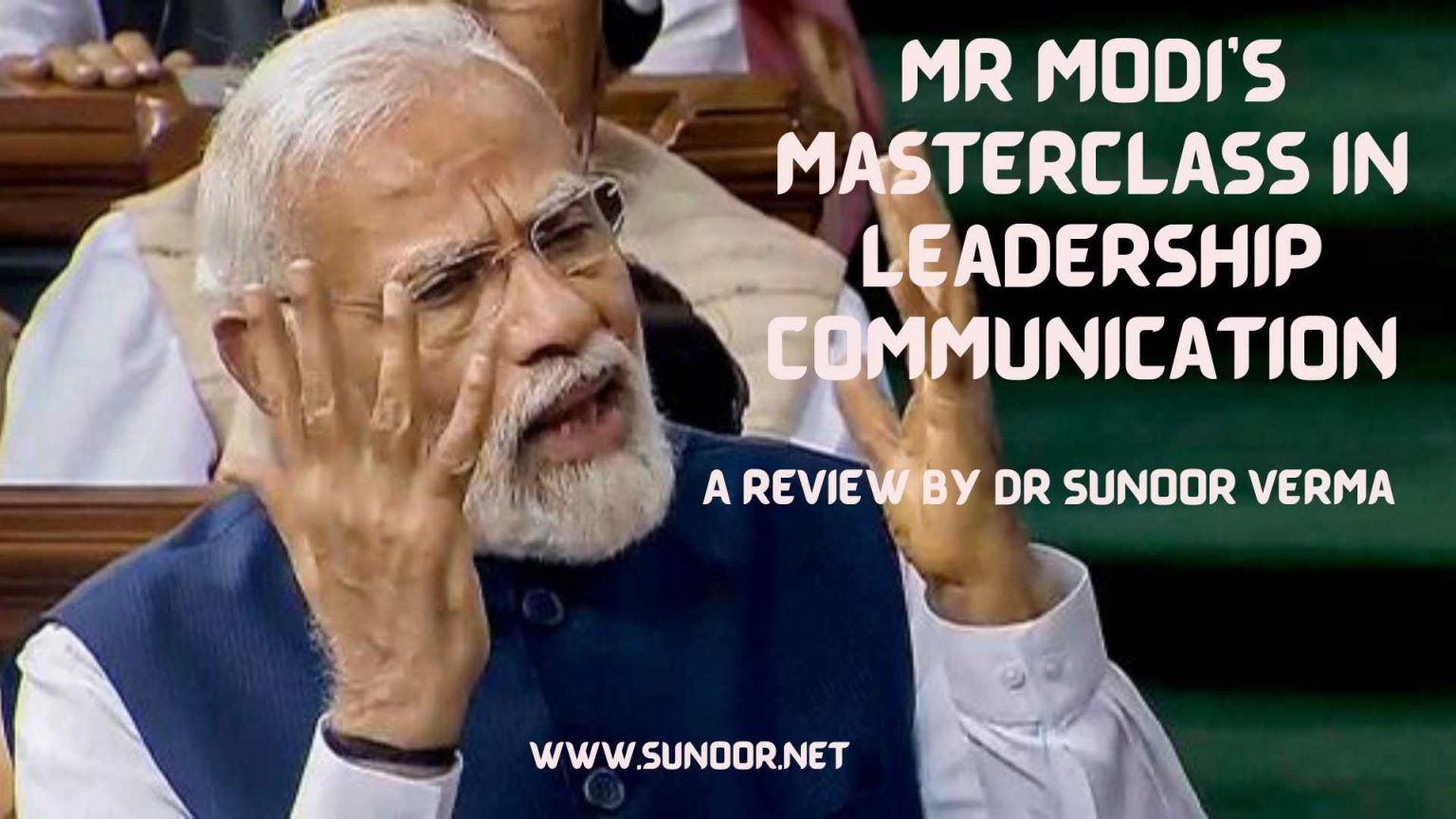
Pm Modi's masterclass in leadership communication
India’s Prime Minister, Mr Narendra Modi, delivered a master class in political #LeadershipCommunication in parliament on August 10, 2023, when a no-confidence resolution was presented against his administration. Mr Modi accused the opposition of having no faith in India, believing those who mocked the country, and being arrogant and incompetent. He also stated that the more they tried to stop him, the more successful he became.
: First and foremost, it was well-timed. The no-confidence resolution was introduced two days after Mr Modi’s party, the BJP won the municipal by-elections in Gujarat. This allowed Mr Modi to capitalize on the BJP’s momentum and depict the opposition as out of touch with the country’s spirit. As a result, this speech can also be classified under #StrategicCommunication.
: First and foremost, it was well-timed. The no-confidence resolution was introduced two days after Mr Modi’s party, the BJP won the municipal by-elections in Gujarat. This allowed Mr Modi to capitalize on the BJP’s momentum and depict the opposition as out of touch with the country’s spirit. As a result, this speech can also be classified under #StrategicCommunication.
: Mr Modi addressed his remarks with passion and conviction. He addressed the people personally and stated unequivocally that he would not back down from the opposition’s challenges. This added urgency and enthusiasm to his address, which helped energize his followers.
How He Used Rhetorical Devices to Connect with the Audience Mr Modi’s grasp of Hindi was a significant asset in the no-confidence vote. Despite being a non-native speaker, he could communicate with his audience in Hindi fluently and confidently. In contrast, his opponents were not fluent in Hindi and frequently made errors. This enhanced Mr Modi’s credibility and intelligence, giving him an advantage in the argument.
Mr Modi’s body language, in addition to his rhetorical abilities, contributed to the effectiveness of his speech. He conveyed confidence, authority, and determination through various nonverbal cues.
Here are some specific examples of how Mr Modi’s body language worked in his favour: Mr Modi’s outfit also contributed to his image of power and confidence. The white kurta-pyjama represents purity, but the Nehru jacket represents power and authority. This confluence of symbols aided Mr Modi in projecting an image of a strong and capable leader who was in touch with the people. His formal dress made him appear more powerful and in charge when he accused the opposition of being out of touch with the people. Similarly, as he discussed India’s accomplishments, his immaculate dress made him appear proud and confident. On the other hand, his projected opponent wore a white half-sleeve shirt that conveyed informality and casualness.
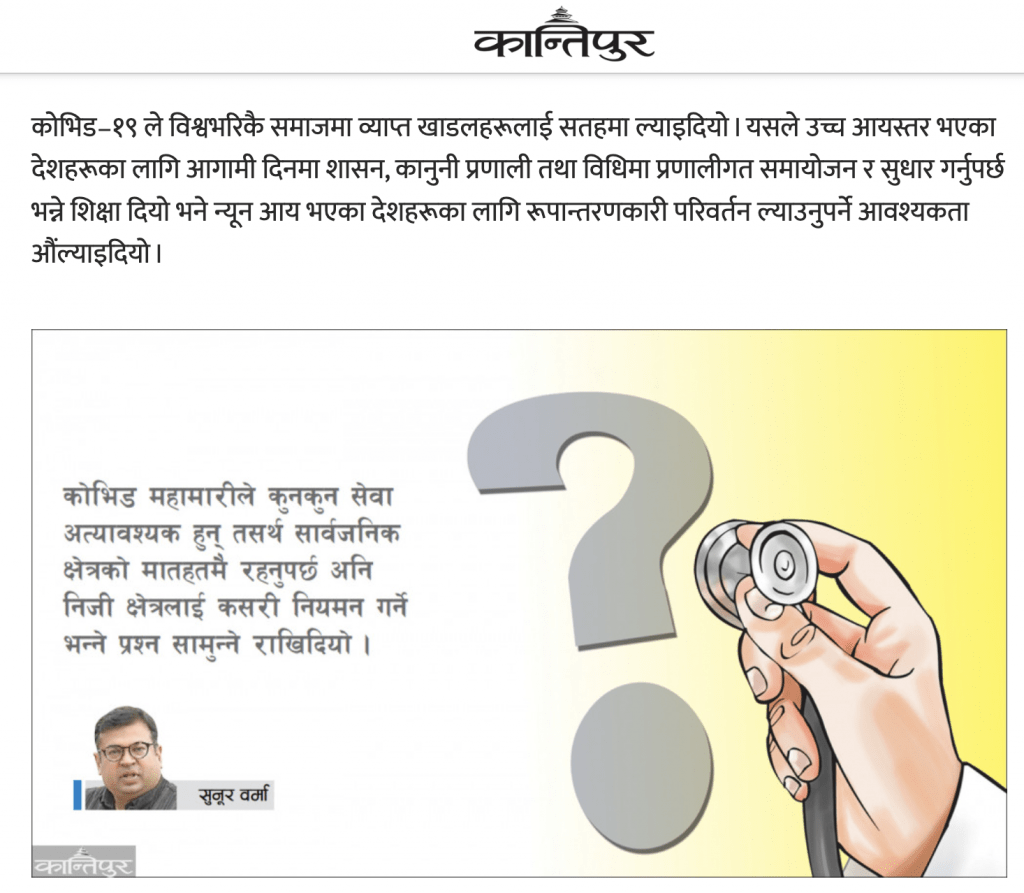
Public Health Debates We Can Ignore At Our Own Peril
Global lessons learnt are not as valuable as we might think!
Having lived and worked in low-, middle- and high-income countries, I do not like sweeping ‘global lessons learnt’. The situational, cultural, and operational contexts based on countries’ income levels vary hugely. Moreover, the reports and recommendations from global apex bodies are often drafted by people from primarily high-income country experiences. Many of them may have never actually worked at the country level. Often their lexica are so watered down in assessments of low-income countries that severe reprimand ends up sounding like applause by publication. Without a scorecard system where each country would know where they need to improve to achieve standards, it is difficult to get a reality check. We, the low-income countries, have a choice to make. We can believe that we are high performers or quench our vanity, critically examine our performance, and take corrective measures.
The glaring gaps in public health that COVID-19 exposed
COVID-19 has exposed critical societal gaps across the globe. In the case of high-income-developed democracies, this means adjustments and fine-tuning. In the case of low-income countries, this has meant seeing a horrid picture in the mirror and the need for transformational change. So a natural enquiry would be-what has been happening in the business of Health Systems Strengthening over the years and billions of donated dollars later? We would have thought that SARS, Ebola, MERS and ZIKA emergencies would have better prepared our health systems, but here we are.
This pandemic has opened some chronic societal wounds, especially in low-income countries. The top issue that warrants an urgent societal debate is what services are essential and must remain in the public domain and how we regulate the private sector. Many proponents for the rapid privatisation of public services in low-income countries are foreign experts. Their countries have achieved an equilibrium between top-notch public services and effective private-sector regulation.
Public Health, Corruption & Transparency
Corruption, lack of transparency, power asymmetry, and invisibility of women in decision-making all contribute to the complexity of public versus private debate in low-income countries. When lawmakers overtly or by proxy own significant numbers of private hospitals, mainstream media, and educational institutions, it becomes difficult to have an objective national debate. The COVID-19 pandemic has allowed us to rethink and reboot societal contracts. The pandemic struck when public trust in institutions- governmental, civil society, private sector, media, academia, and the judiciary was at the lowest after years of steady decline globally.
Public sector- the saviour during COVID-19
Suppose we reflect on the past two years of the pandemic in low-income countries. In that case, we will note that we turned to either the public sector organisation or the defence forces whenever we needed a timely nationwide response. For example, when students needed to be brought back from abroad in India, the then-national carrier Air India stepped up. When stranded migrant workers needed to return home, it was the Indian Railways that rose to the occasion. When liquid oxygen had to be mobilised, the public sector was at work again. Working around the clock to secure scarce supplies from other countries and securing evacuation permissions were diplomats who are public servants. On the borders, facilitating the movement of people, supporting testing, quarantine etc., were members of the border police, armed forces, and the police. Similar was the case with many countries in South and Southeast Asia.
Other rich countries, such as Germany and South Korea, responded robustly. Attribution to the ability of their governments to manage private-sector activity and essentially public ownership of critical health system elements. Their impressive testing capacity was thanks to public laboratories and the presence of industries that could supply the required safety equipment and chemicals.
The South and Southeast Asia neighbourhood
Some governments in Southeast Asia have managed to build public health systems that learn. So, lessons from SARS and Tsunami have fed into their preparedness systems, allowing them to respond efficiently and effectively. The city-state of Singapore has traditionally shown a proactive approach based on solid scenario planning and proactive public health communication. Within India, the response of the southern state of Kerala has stood out. Over the decades, Kerala has invested in health, education, and women’s empowerment. It has consistently adopted an evidence-based approach to decision-making on health matters. Theirs is a learning system that drew heavily on lessons from the NIPAH virus emergency not too long ago. Kerala has also avoided the black-and-white notion of Public or Private and established a successful public-private partnership model. The government of Vietnam efficiently diagnosed the regional situation and closed its borders. Similarly, they were swift in developing low-cost test kits.
Public Health and the private vs public discourse- an axis of national security too
The considerations that need to be at the centre of this post-COVID-19 public-private discourse are:
- Re-evaluate and reign in the privatisation spree of health-related assets and services. Nurture back to health underperforming units through quick and transparent reform.
- Two, Reboot and relaunch sensible and practical national health policies that serve the objective of achieving universal health coverage. These should not be a copy-paste of what middle- or high-income countries are doing but should be rooted in the realities of poverty, patriarchy, and emerging democracy.
- Three, While the issue may appear to be of health, the scope of solution searching is well beyond the expertise or experience of health actors. The complexity of this matter warrants the leadership of the Ministries of Finance, Law, Commerce and Home. For example, supply chains, the rule of law during the lockdown, transportation of people, and labour issues related to health workers have solutions outside of health agencies’ remit.
- Four, Governments must take the lead and regulate the private sector more effectively and transparently. While governing the somewhat more streamlined public sector may be more satisfying, the rapidly and wildly growing private sector needs aggressive regulation. In many low-income countries, this means enforcing the existing fantastic on-paper rules and not drafting new ones. Moreover, the hopelessness of data collection from private sector health providers, whether on testing, bed occupancy, oxygen availability, or mortality during COVID-19, has hampered many low-income countries’ effective and timely response.
Refocusing on the Health for All agenda
This public discourse requires us to open our eyes to what we witnessed in the last two years and set aside our ambition and vanity. Let us acknowledge the actual situation in our countries and not artificially push ourselves into a higher boxing category for mere prestige. Organic, home-grown solutions are needed now, not a collage of random international best practices. Instead of drawing lessons from countries in the region, we need to study states and provinces with similar challenges and partner with them. Cross-border areas should be of interest in standard solution searching.
Many glorious careers are built worldwide in the name of Health Systems Strengthening. However, COVID-19 has shown that not much strengthening may have happened. WHO’s “Health for All” agenda ought to remain our focus. However, the tools, processes and commitment need to be indigenous. Countries must bring their sharpest, most independent, and most fearless minds to this debate.
Let us not forget that health, education, and security are nation-building tools. Taxpayers will have little incentive to contribute their fair share if all these continue being disproportionately privatised. One can only imagine the threat to democracy this will pose.
About the Author
Dr Sunoor Verma is a global health practitioner. He has advised WHO, UNICEF, UNHCR, HUG-Geneva and Cambridge University on Strategy, Leadership Communication, Advocacy and Resource Mobilization. He is credited with setting up WHO’s communication portfolio from scratch in Nepal in the midst of COVID-19. He has set up and led the country and regional operations for the European Centre for Minority Issues in the Balkans. He has supported track two peace processes in Macedonia, Kosovo and Sri Lanka and emergency response to the Tsunami, Avian Influenza and COVID-19. He has taught Global Health at Boston University. He has curated partnership initiatives with Macedonia, Kosovo, Germany, Switzerland, Australia, and Nepal parliamentarians. He divides his time between the foothills of the Jura Mountains in France and Buddhanilkantha in Nepal.
Published in Nepal’s national daily Kantipur on 30 June 2022 in Nepali language. This is a translation with some additional text.
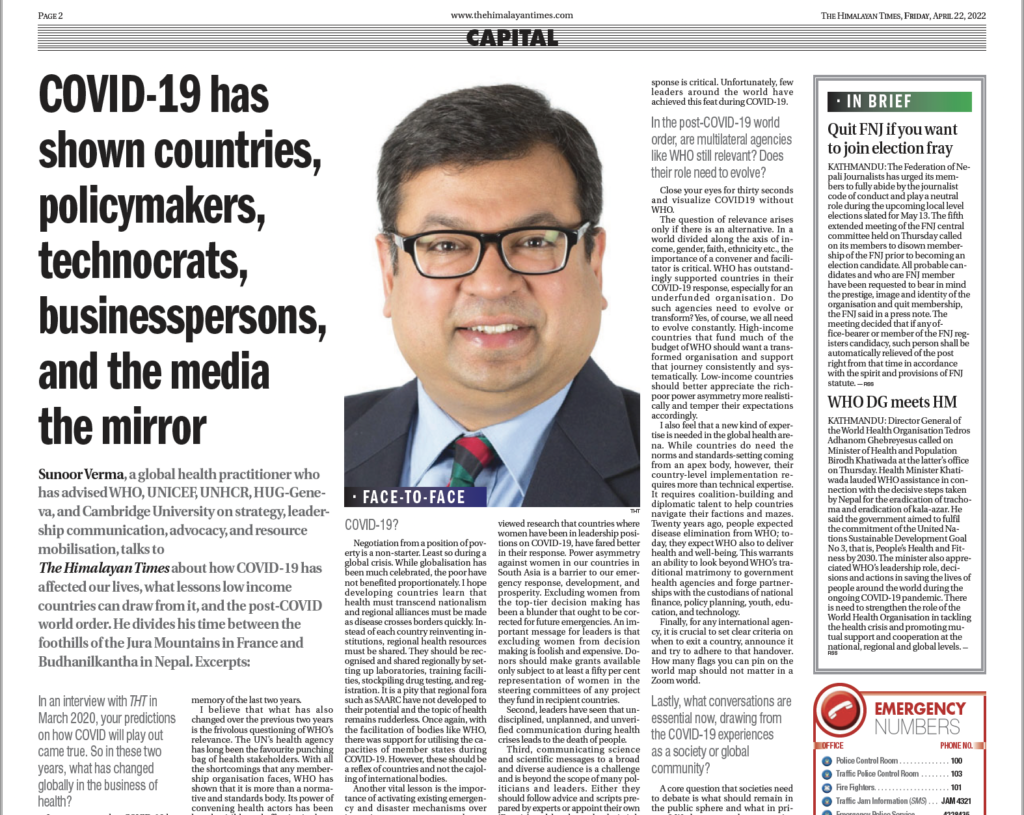
An Urgent and Critical Re-think of Global Health Governance and Mandates is Warranted!
THE HIMALAYAN TIMES (THT) QUESTION: IN AN INTERVIEW WITH THT IN MARCH 2020, YOUR PREDICTIONS ON HOW COVID-19 WILL PLAY OUT CAME TRUE. SO, WHAT HAS CHANGED IN THE GLOBAL HEALTH BUSINESS IN THESE TWO YEARS?
Dr Sunoor: It seems to me that COVID-19 has shown countries, policymakers, technocrats, businesspersons, and the media the mirror. And the picture in the mirror was far from pretty. Years of under-investment in health as public service and health professionals have brought us to despair. We also saw that when there is strong cooperation between high-income countries and multilateral agencies like WHO, there can be accelerated solution-finding, as with vaccine development. At the same time, we saw that not much has changed on the axis- rich and poor. The rich controlled the allocation of essential Covid19 supplies. The helplessness of the poor, both as individuals and as countries and their dependency on acts of charity by rich countries is one strong memory of the last two years. I believe that what has also changed over the previous two years is the frivolous questioning of WHO's relevance. The UN's health agency has long been the favourite punching bag of health stakeholders. With all the shortcomings of any membership organisation, WHO has shown that it is more than a normative and standards body. Its power of convening health actors has been hugely visible and effective these past two COVID-19 years. Low-income countries often vent on UN agencies for their miseries, especially the WHO. This is because they cannot box donor countries as they welcome the bilateral money that flows from them. Many member states ask WHO to be stronger, wiser, braver, etc. They must realise that WHO is the sum of the strength of its member states. Low-income countries can only contribute to WHO's strengthening by making their health systems solid and practical for the commoner. All said and done; global health governance needs a rethink and recalibration. India, Brazil, Thailand and many others who until now were regarded at the periphery of global health governance architecture have unequivocally demonstrated their strength.
THT: WHAT ARE THE LESSONS FOR LOW-INCOME COUNTRIES FROM THE LAST TWO YEARS OF COVID-19?
Dr Sunoor: Negotiation from a position of poverty is a non-starter. Least so during a global health crisis. While globalisation has been much celebrated, the poor have not benefitted proportionately. I hope that developing countries learn that health must transcend nationalism and regional alliances must be made as disease crosses borders quickly. Instead of each country reinventing institutions, regional health resources must be shared. They should be recognised and shared regionally by setting up laboratories, training facilities, stockpiling drug testing, and registration. It is a pity that regional fora such as SAARC have not developed to their potential and around the topic of health remain rudderless. Once again, with the facilitation of bodies like WHO, there was support for utilising the capacities of member states during COVID-19. However, these should be a reflex of countries and not the cajoling of international bodies. Regional global health alliances need to be forged now. These need to be regional in operations and financing yet learning from global systems.
Another vital lesson is the importance of activating existing emergency and disaster mechanisms over inventing new structures on the go. Some countries learned that emergencies are not the best time for adventure but rather for tested mechanisms.
THT: AS YOU WORK CLOSELY WITH LEADERS AND ELECTED OFFICIALS ON STRATEGY AND LEADERSHIP COMMUNICATION AROUND THE GLOBE, WHAT LESSONS ARE THERE FROM COVID-19 FOR LEADERS?
Dr Sunoor: COVID-19 has shown the importance of leaders exercising leadership. Occupying a leadership position is no guarantee of leadership. There is ample evidence and peer-reviewed research that countries where women have been in leadership positions on COVID-19, have fared better in their response. Power asymmetry against women in our countries in South Asia is a barrier to our emergency response, development, and prosperity. Excluding women from top-tier decision-making has been a blunder that should be corrected for future emergencies. An important message for leaders is that excluding women from decision-making is foolish and expensive. Donors should make grants available only subject to at least a fifty per cent representation of women in the steering committees of any project they fund in recipient
countries.
Second, leaders have seen that undisciplined, unplanned, and unverified communication during health crises leads to the death of people. Third, communicating science and scientific messages to a broad and diverse audience is challenging and beyond the scope of many politicians and leaders. Either they should follow advice and scripts prepared by experts or appoint their own "Faucis" and let them do their job without interference. The top communicators on COVID-19 among leaders have been the former Chancellor of Germany and the Prime Minister of New Zealand. While Mrs Angela Merkel, a scientist, simplified complex data for her citizens in direct telecasts, Ms Jacinda Ardern showed unprecedented transparency in decision-making. If you don't understand science, don't deny it or twist it but appoint experts to communicate it and let them do their job.
Another lesson for leaders, I hope, is that they must be unifiers and not dividers in crisis. When people suffer, the last thing they want to see is their leaders' bickering. The ability to transcend petty politics and create an environment of a unified national response is critical. Unfortunately, few leaders around the world have achieved this feat during COVID-19.
THT: IN THE POST, COVID-19 WORLD ORDER, ARE MULTILATERAL AGENCIES LIKE WHO STILL RELEVANT? DOES THEIR ROLE NEED TO EVOLVE?
Dr Sunoor: Close your eyes for thirty seconds and visualize COVID-19 without WHO.
The question of relevance arises only if there is an alternative. In a world divided along the axis of income, gender, faith, ethnicity etc., the importance of a convener and facilitator is critical. WHO has outstandingly supported countries in their COVID-19 response, especially for an underfunded organisation. Do such agencies need to evolve or transform? Yes, of course, we all need to evolve constantly. High-income countries that fund much of the budget of WHO should want a transformed organisation and support that journey consistently and systematically. Low-income countries should better appreciate the rich-poor power asymmetry more realistically and temper their expectations accordingly.
I also feel that a new kind of expertise is needed in the global health arena. While countries need the norms and standards-setting from an apex body; however, their country-level implementation requires more than technical expertise. It requires coalition-building and diplomacy talent to help countries navigate their factions and mazes. Twenty years ago, people expected disease elimination from WHO; today, they expect WHO also to deliver health and well-being. This warrants an ability to look beyond WHO's traditional matrimony to government health agencies and forge partnerships with national finance, policy planning, youth, education, and technology custodians. Finally, for any international agency, it is crucial to set clear criteria on when to exit a country, announce it, and adhere to that handover. How many flags you can pin on the world map should not matter in a Zoom world.
THT: LASTLY, WHAT CONVERSATIONS ARE ESSENTIAL NOW, DRAWING FROM THE COVID-19 EXPERIENCES AS A SOCIETY OR GLOBAL COMMUNITY?
Dr Sunoor: A core question that societies need to debate is what should remain in the public sphere and what in private? We have seen that countries with a robust public system of services have done much better in their emergency COVID-19 response. This is an important question, especially for low- and middle-income countries with an urgency to privatise public institutions and services in a call for greater efficiency. Some countries that advocate privatisation in aid-recipient countries have maintained solid public service systems in their own countries. So, this needs to be an organic debate in situ.
At the citizen level, I hope we will appreciate that Health is Politics. Voters would need to demand of their politicians the fundamental right to good quality health, education, and nutrition. And hopefully, this is what the ballot would be cast on in future.
ABOUT THE AUTHOR
Dr Sunoor Verma is a global health practitioner. He has advised WHO, UNICEF, UNHCR, HUG-Geneva and Cambridge University on Strategy, Leadership Communication, Advocacy and Resource Mobilization. He has set up and led the country and regional operations for the European Centre for Minority Issues in the Balkans. He has supported track two peace processes in Macedonia, Kosovo and Sri Lanka and emergency response to the Tsunami, Avian Influenza and COVID-19. He has taught Global Health at Boston University. He has curated partnership initiatives with Macedonia, Kosovo, Germany, Switzerland, Australia, and Nepal parliamentarians. He divides his time between the foothills of the Jura Mountains in France and Buddhanilkantha in Nepal.
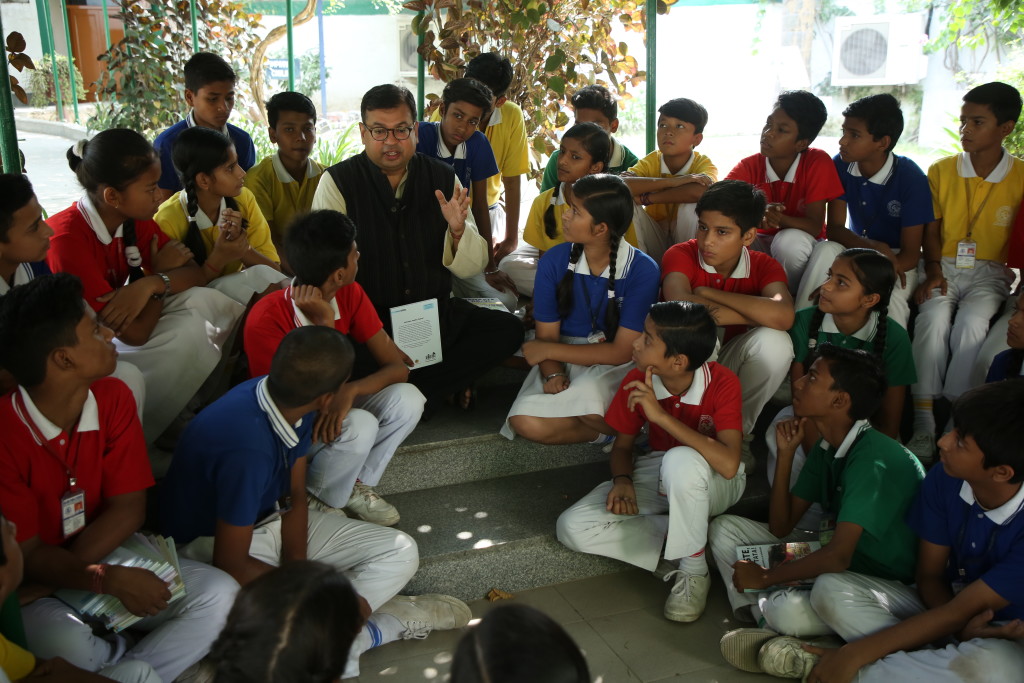
For Healthy & Happy Kids, Reduce Screentime Now!
Unreasonable screentime threatens children's mental and physical well-being and is a significant parenting challenge today! According to the World Health Organization (WHO), 10% of youngsters over the globe suffer from mental problems. This is especially troubling, considering that childhood and adolescence are crucial periods for mental health. The brain undergoes significant growth and development during this period. Children and adolescents develop cognitive and social-emotional skills that influence their future mental health and are crucial for adopting adult roles in society.
Early adverse experiences in homes, schools, or digital places, such as exposure to violence, the mental illness of a parent or other caregiver, bullying, and poverty, raise the likelihood of developing mental illness. In addition, too much time spent in front of a screen has been related to sleep deprivation, speech delays, poor social skills, and other life issues. When screentime becomes an all-consuming pastime for youngsters, this is dubbed screen addiction.
WHAT IS UNREASONABLE SCREENTIME AND SCREEN ADDICTION?
Screen addiction describes the compulsive and excessive use of electronic devices such as smartphones, tablets, and laptops. While technology has undoubtedly made our lives easier, it has also had several detrimental implications, notably regarding mental health. Children are vulnerable to screen addiction, which can harm their mental health.
Addiction symptoms include the inability to stop taking the substance or when the substance's use begins to interfere with one's life or relationships. The symptoms are identical when it comes to youngsters and screens.
HOW DOES SCREEN ADDICTION IMPACT HEALTH?
The increased risk of developing anxiety and despair is one of the most significant ways that screen addiction impacts children's mental health. Excessive screen usage is related to elevated levels of stress, anxiety, and depression in youngsters, according to research. This is due to several factors, including the social isolation that frequently results from excessive use of electronic devices, the overstimulation of the brain that occurs when children are exposed to an excessive amount of visual and auditory stimuli, and the disruption of sleep patterns that can arise when screens are used too close to bedtime.
Your child's danger of being exposed to cyberbullying and pornographic material increases as they spend more time on phones and other screens. Similarly, more time spent on social media is frequently associated with sadness and internalizing issues. In addition, spending more time in front of a screen is associated with a decrease in parental bonding, according to scientific research.
THE NEGATIVE IMPACT OF UNREASONABLE SCREENTIME ON PHYSICAL HEALTH
In addition to harming children's mental health, screen addiction can negatively impact their physical health. For instance, children who spend an excessive amount of time seated in front of screens are at risk for acquiring obesity, which is related to a variety of physical and mental health issues. In addition, excessive screen time can result in eye strain, headaches, and other physical pain, exacerbating stress and anxiety.
Reducing screen time for children can be challenging, mainly when screens are often used for entertainment and educational purposes. However, here are some practical tips for reducing screentime for children.
WHAT CAN PARENTS DO TO MANAGE SCREEN TIME FOR CHILDREN?
Parents and caregivers must actively supervise their children's screen time to reduce their excessive use of electronic devices. Establishing explicit guidelines and limits for screen use is one approach to this. For instance, parents may limit screen usage to a set number of hours per day or require screens to be turned off at least one hour before bedtime.
KEY TIPS
- Use parental controls on the devices: Parental controls can effectively limit screentime and restrict access to certain apps or websites. Parents can use parental control features on devices or install third-party apps to help monitor and control their children's screentime.
- Encourage youngsters to participate in activities that support their physical and mental health as another method for reducing screen addiction. This could be outdoor play, reading, artistic pursuits, or time spent with friends and family. In addition, parents may limit the amount of time their children spend in front of screens and create healthy behaviours by encouraging their children to participate in these activities.
- Establish tech-free zones at home: Establishing tech-free zones in the home, such as the dining table or the bedroom, can aid in reducing the amount of time youngsters spend in front of devices. In addition, to foster more face-to-face engagement and family time, parents can advise youngsters to leave their devices in another room during these times.
- Finally, parents may exhibit responsible screen use. Children typically emulate their parents' behaviour; therefore, if parents are constantly checking their phones or watching television, it is conceivable that their children will do the same. By demonstrating appropriate screen usage, parents can provide a positive example for their children and encourage the development of mental and physical health-promoting activities.
ACTION POINTS FOR ADVOCACY ORGANISATIONS
Organisations advocating for children's mental health need to develop new strategies to integrate screentime advocacy into their mandate. Similarly, strategic partnerships in the public and private sectors must be established to address the growing challenge of screen addition.
Published by Radio Nepal on 18 March 2023
ABOUT THE AUTHOR
Dr Sunoor Verma is a global health practitioner. He has advised WHO, UNICEF, UNHCR, HUG-Geneva and Cambridge University on Strategy, Leadership Communication, Advocacy and Resource Mobilization. He has set up and led the country and regional operations for the European Centre for Minority Issues in the Balkans. He has supported track two peace processes in Macedonia, Kosovo and Sri Lanka and emergency response to the Tsunami, Avian Influenza and COVID-19. He has taught Global Health at Boston University. He has curated partnership initiatives with Macedonia, Kosovo, Germany, Switzerland, Australia, and Nepal parliamentarians. He divides his time between the foothills of the Jura Mountains in France and Buddhanilkantha in Nepal.
ADDITIONAL RESOURCES
1. Here is a fantastic article with a step-by-step "How to.. " Guide to screen addictions and responsible digital use by Holly Nibllet. In this article, the author discusses the advents in technology and how to control mobile screen time. How COVID-19 has changed our viewing habits, along with screentime data for children from the UK, is presented.
2. Published in 2019 is another practical guideline Digital Guidelines: Promoting Healthy Technology Use for Children by the American Psychological Association.
3. The American Academy of Pediatrics has established recommendations for children's media use. Their current recommendations advise:
■ For children under 18 months, avoid screen-based media except video chatting.
■ For children 18 months to 24 months, parents should choose high-quality programming and watch with their children.
■ For children 2 to 5, limit screentime to one hour per day of high-quality programming.
■ For children 6 and up, establish consistent limits on the time spent using media and the types of media.
4. A documentary worth watching is by Carlota Nelson, director of the documentary Brain Matters, which explores why too much screentime can harm babies and the importance of ensuring children enjoy off-screen experiences. Also, check out her engaging interview on the thinking behind this film.
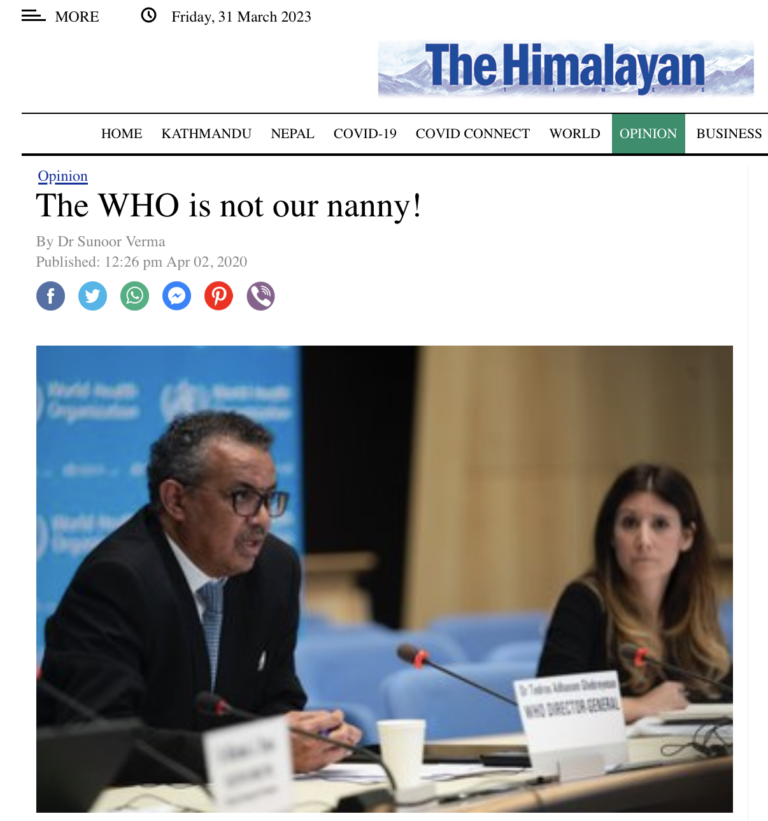
The WHO Is Not Our Nanny!
IS WHO OUR GLOBAL HEALTH NANNY?
Expecting the World Health Organisation (WHO) to be our universal nanny is unrealistic and dangerous, especially in times of crisis. WHO is a body that brings together global expertise, health intelligence and experience to all its member states. Every organisation essentially represents the nature of its membership and what its members want it to be. WHO is made by your governments. Countries must take WHO's guidance as their core 'plan minimum' and add to it their wisdom.
IMAGINE THE COVID-19 RESPONSE WITHOUT THE WHO
Gripped by COVID-19, all eyes are on WHO for guidance on what to do and what not to do? All it takes is to imagine our response to the pandemic without the WHO. All said and done common perception is that this is an organisation owned by member states and would be the closest that we could get to neutral information. Many criticise WHO for being influenced by one powerful state or another. However, no one has developed an alternative body that would enjoy the reach or brand recognition of WHO while maintaining the entire range of health expertise from epidemics to road injuries. Governments quote the WHO, and follow its guidance and feedback data into it. The network of collaborative centres that the WHO operates in partnerships with academia and government is an immense asset to the global pool of knowledge and capacity.
What started as a health crisis has very rapidly evolved into a societal crisis. Some countries have declared COVID-19 a national security crisis, some have termed it a national disaster, and others have termed it a war. It is essential in this context to understand the role of the WHO, lower our expectations of it and shift specific tasks and responsibilities to other actors.
SHIFT EXPECTATIONS AWAY FROM WHO TO OTHER AGENCIES
While the WHO teams around the globe churn out a range of information material on how to deal with COVID19, other actors need to take that information forward to their constituents. Take, for example, the WHO's social distancing guidelines. These ought to be taken up by organisations within countries, modified to the local context, translated into the local languages and amplified using channels that work best in that given context. Marinating in inaction, awaiting tailor-made guidance for every population segment for every country is a luxury we can not afford now. In the country context, line ministries need to step up their game and use their intelligence to customise the science coming out of the WHO and channel it to their captive audiences. Spoon-feeding is not an option in times of crisis. Similar to the WHO, as Ministries of Health are overwhelmed in responding to the COVID19, line ministries should not self-paralyse for lack of vetting of each communication piece from their Ministry of Health counterparts. There is neither time nor any human resources that can be spared for this. In multiplying and amplifying messages, mistakes might be made here and there, but they can be corrected. The risk of doing nothing is way higher than making a few mistakes.
HELP WHO DELIVER ON ITS CORE MANDATE
Every emergency coordination meeting I have attended at a country, regional or headquarters level invariably ends with one default recommendation- we must coordinate better. Pick any emergency response evaluation, and you will see the same outcome. While coordination during a crisis may hold some limited promise within sectors-e.g. UN country teams, International NGOs, and government ministries, it rarely works between industries. It is no different from how things function or don't within a building of tenants or extended family-some will always go solo or only halfheartedly implement agreements. I have found this to be valid as emergencies draw out. In a COVID-19 global crisis, let us allow WHO to focus on giving the world its best technical intelligence and advice. Let us not put it under the expectation of global babysitting. It is the time to encourage all other ministries, organisations, industrial bodies, and associations to study, digest and use the WHO's knowledge and advance it to their audiences as quickly as possible using their innate intelligence and experience.
Let us help the WHO focus on its core knowledge generation and dissemination business. It is time for each of us to step up to our duty of using WHO's output responsibly and proactively in beating the menace of COVID19.
ABOUT THE AUTHOR
Dr Sunoor Verma is a former Cardiothoracic surgeon; his experience ranges from various emergency settings related to the Avian Flu, SARS, Tsunami, HIV/AIDS, Kosovo crisis, Macedonia armed conflict and the Sri Lanka conflict. His focus is Strategy, Risk and Crisis Communication and Strategic Partnerships in international development. He has advised WHO, UNICEF UNHCR, the European Centre for Minority Issues, Cambridge University, Boston University and the Hospitals of the University of Geneva. He balances his high-level policy work with advisory work to grassroots NGOs worldwide. He works out of the Lake Geneva region.
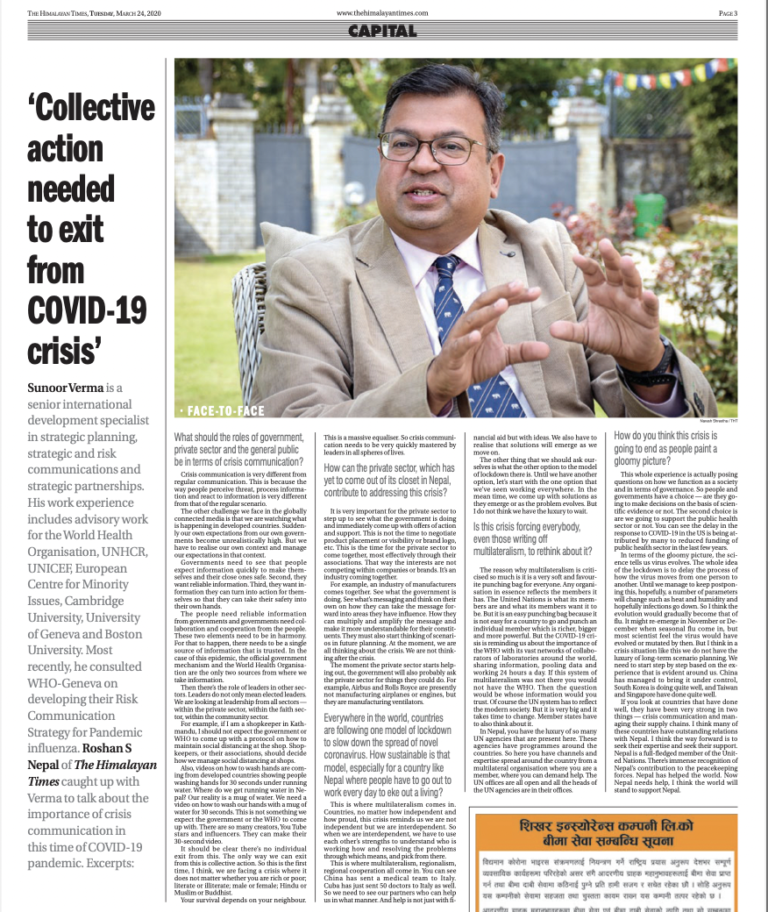
Collective Action Needed To Exit From Covid-19 Crisis
WHAT SHOULD THE ROLES OF GOVERNMENT, PRIVATE SECTOR AND THE GENERAL PUBLIC BE IN TERMS OF CRISIS COMMUNICATION?
Crisis communication is very different from regular communication. This is because the way people perceive threat, process information and react to information is very different from that of the regular scenario.
The other challenge we face in the globally connected media is that we are watching what is happening in developed countries. Suddenly our own expectations from our own governments become unrealistically high. But we have to realise our own context and manage our expectations in that context.
Governments need to see that people expect information quickly to make themselves and their close ones safe. Second, they want reliable information. Third, they want information they can turn into action for themselves so that they can take their safety into their own hands.
The people need reliable information from governments, and governments need collaboration and cooperation from the people. These two elements need to be in harmony. For that to happen, there needs to be a single source of information that is trusted. In the case of this epidemic, the official government mechanism and the World Health Organisation are the only two sources from where we take the information.
Then there's the role of leaders in other sectors. Leaders do not only mean elected leaders. We are looking at leadership from all sectors - within the private sector, the faith sector, and within the community sector.
For example, if I am a shopkeeper in Kathmandu, I should not expect the government or WHO to come up with a protocol on how to maintain social distancing at the shop. Shopkeepers, or their associations, should decide how we manage social distancing at shops.
Also, videos on how to wash hands from developed countries show people washing their hands for 30 seconds under running water. Where do we get running water in Nepal? Our reality is a mug of water. We need a video on how to wash our hands with a mug of water for 30 seconds. This is not something we expect the government or the WHO to come up with. There are so many creators, YouTube stars and influencers. They can make their 30-second video.
It should be clear there's no individual exit from this. The only way we can exit from this is through collective action. So this is the first time, I think, we are facing a crisis where it does not matter whether you are rich or poor; literate or illiterate; male or female; Hindu or Muslim or Buddhist.
Your survival depends on your neighbour. This is a massive equaliser. So crisis communication needs to be mastered very quickly by leaders in all spheres of life.
HOW CAN THE PRIVATE SECTOR, WHICH HAS YET TO COME OUT IN NEPAL, ADDRESS THIS CRISIS?
It is very important for the private sector to step up to see what the government is doing and immediately come up with offers of action and support. This is not the time to negotiate product placement, visibility, brand logo, etc. This is the time for the private sector to unite most effectively through their associations. That way, the interests are not competing within companies or brands. It's an industry coming together.
For example, an industry of manufacturers comes together. See what the government is doing. See what the messaging is and think about how they can take the message forward into areas they influence. How they can multiply and amplify the message and make it more understandable for their constituents. They must also start thinking of scenarios in future planning. At the moment, we are all thinking about the crisis. We are not thinking after the crisis.
When the private sector starts helping out, the government will also probably ask the private sector for things they could do. For example, Airbus and Rolls Royce are presently not manufacturing aeroplanes or engines, but they are manufacturing ventilators.
EVERYWHERE IN THE WORLD, COUNTRIES ARE FOLLOWING ONE MODEL OF LOCKDOWN TO SLOW DOWN THE SPREAD OF NOVEL CORONAVIRUS. HOW SUSTAINABLE IS THAT MODEL, ESPECIALLY FOR A COUNTRY LIKE NEPAL WHERE PEOPLE HAVE TO GO OUT TO WORK EVERY DAY TO EKE OUT A LIVING?
This is where multilateralism comes in. Countries, no matter how independent and how proud, this crisis reminds us we are not independent but we are interdependent. So when we are interdependent, we have to use each other's strengths to understand who is working how and resolving the problems through which means, and pick from there.
This is where multilateralism, regionalism, regional cooperation all come in. You can see China has sent a medical team to Italy. Cuba has just sent 50 doctors to Italy as well. So we need to see our partners who can help us in what manner. And help is not just with financial aid but with ideas. We also have to realise that solutions will emerge as we move on.
The other thing that we should ask ourselves is what the other option to the model of lockdown there is. Let's start with the one option we've seen working everywhere until we have another option. In the meantime, we develop solutions as they emerge or as the problem evolves. But I do not think we have the luxury of waiting.
IS THIS CRISIS FORCING EVERYBODY, EVEN THOSE WRITING OFF MULTILATERALISM, TO RETHINK IT?
Multilateralism is criticised because it is a soft and favourite punching bag for everyone. Any organisation, in essence, reflects the members it has. The United Nations is what its members are and what its members want it to be. But it is an easy punching bag because it is not easy for a country to go and punch an individual member which is more affluent, bigger and more powerful. But the COVID-19 crisis is reminding us about the importance of the WHO with its vast networks of collaborators of laboratories around the world, sharing information, pooling data and working 24 hours a day. If this system of multilateralism was not there, you would not have the WHO. Then the question would be, whose information would you trust? Of course, the UN system has to reflect modern society. But it is very big, and it takes time to change. Member states have to also think about it.
You have the luxury of so many UN agencies in Nepal. These agencies have programmes around the countries. So here you have channels and expertise spread around the country from a multilateral organisation where you are a member, where you can demand help. The UN offices are open, and all the heads of the UN agencies are in their offices.
HOW DO YOU THINK THIS CRISIS IS GOING TO END AS PEOPLE PAINT A GLOOMY PICTURE?
This whole experience poses questions on how we function as a society and in governance. So people and governments have a choice - will they make decisions based on scientific evidence? The second choice is whether we are going to support the public health sector or not. You can see the delay in response to COVID-19 in the US is attributed by many to reduced funding of the public health sector in the last few years.
In terms of the gloomy picture, science tells us virus evolves. The whole idea of the lockdown is to delay how the virus moves from one person to another. Hopefully, several parameters will change until we manage to postpone this, such as heat and humidity and hopefully, infections go down. So I think the evolution would gradually become that of the flu. It might re-emerge in November or December when seasonal flu occurs, but most scientists feel the virus would have evolved or mutated by then. But I think we do not have the luxury of long-term scenario planning in a crisis like this. We need to start step by step based on the experience that is evident around us. China has managed to bring it under control, South Korea is doing quite well, and Taiwan and Singapore have done quite well.
If you look at countries that have done well, they have been very strong in crisis communication and supply chain management. I think many of these countries have outstanding relations with Nepal. I think the way forward is to seek their expertise and support. Nepal is a full-fledged member of the United Nations. There's immense recognition of Nepal's contribution to the peacekeeping forces. Nepal has helped the world. Now Nepal needs help; I think the world will stand to support Nepal.
ABOUT THE AUTHOR
Sunoor Verma is a senior international development specialist in strategic planning, strategic and risk communications and strategic partnerships. His experience includes advisory work for the World Health Organisation, UNHCR, UNICEF, European Centre for Minority Issues, Cambridge University, University of Geneva and Boston University. Most recently, he consulted WHO-Geneva on developing their Risk Communication Strategy for Pandemic influenza.
Roshan S Nepal of The Himalayan Times caught up with Dr Sunoor to talk about the importance of crisis communication in this time of COVID-19 pandemic. Published on 24th March 2020 in The Himalayan Times English national daily newspaper Nepal.
Health Communication Fatigue Looms Large
OVER-COMMUNICATING HEALTH-CAN IT EVER BE COUNTERPRODUCTIVE?
We seem to be over-communicating health in the aftermath of COVID-19 and now run the risk of making our communication ineffective the next time a health emergency arises. The miracle of antibiotics, when prescribed appropriately, is best known to the patient whose condition starts improving quickly. However, this does not mean antibiotics are the solution to every illness. If given indiscriminately, the damage can be vast and irreversible. Similar is the case with health communication.
THE RISK OF COMMUNICATION FATIGUE
While the pandemic showed the necessity of public health communication, it may now be causing communication fatigue among the public. It is essential to review the frequency and volume of health communication. COVID-19 taught governments, health organisations, and public health professionals how to communicate complicated scientific knowledge to the public in an understandable and actionable manner.
In the public interest, centre stage was provided to the World Health Organisation (WHO) to be the lead UN spokesperson on COVID-19. The UN Secretary-General showed admirable discipline in ensuring that Dr Tedros, the Director General of the WHO, leads the UN in critical communication during the pandemic. Health has been at the heart of every important policy debate over the last two years. The audience's attention gained on the importance of human and animal health can be easily lost if strategic choices are now not made on how much to communicate and what to communicate on health.
In 2020, WHO coined the word Infodemic to describe an outbreak of information, disinformation, rumours, and fake news. Now it seems critical that international health actors do not turn into perpetrators of Infodemics, especially in the context of countries.
ENDLESS MARKING OF HEALTH DAYS- RISK OF LOSING PUBLIC TRUST AND CREDIBILITY
In February, health agencies marked World Cancer Day, International Day of Zero Tolerance for Female Genital Mutilation, International Day of Women and Girls in Science, International Epilepsy Day, and Congenital Heart Defect Awareness Day. Similarly, in March, the impressive line-up is International Women's Day, World Kidney Day, World Oral Health Day, and World Tuberculosis (TB) Day. And in April, we will mark World Health Day, World Malaria Day, World Immunization Week and World Day for Safety and Health at Work.
The point is that for each of these special days, we see events being organised with elaborate ceremonies, the printing of banners, posters, selfie stands, speeches, t- shirts, standees and most troubling- an avalanche of social media posts with reminders on the importance of whatever is being celebrated. This country level health- Infodemic which I call "HelDemic", is not limited to the digital space but is also sucking up the valuable time of policymakers and health workers and generating tons of plastic waste.
A lack of interest and compliance is one of the critical concerns of communication fatigue in public health communication. When people are continually bombarded with a lot of information and messaging, they may get desensitised and tune it out. This might lead to a lack of incentive to adopt healthy behaviours or follow public health norms, perhaps increasing disease spread.
CORRECTIVE ACTION AND CELEBRATION TRIAGE IS NEEDED URGENTLY!
Disease burden and national strategic plans should guide the choice of three to five health days to mark in a year. An uninterrupted barrage of visuals of inaugurations, closing ceremonies and speechmakers on social media is not the best health communication investment and risks reducing the credibility of those seen engaging in this. Effective communication strategies, such as using a variety of communication channels and formats, can help prevent communication fatigue and promote healthy behaviours. Choosing to tone down communication and spacing is also a wise strategy.
BETWEEN THE DEVIL AND THE DEEP SEA- TOUGH CHOICES FOR THE POOR
This is easier said than done, especially in countries that rely heavily on foreign aid to fund critical services like healthcare. Public employees in these countries are often needed to attend meetings and such events with international donors to seek financing, manage projects, and report on progress. While working with international donors is vital to get funding and promote development programs, there are significant risks involved with public officials becoming overly focused and exposed to ceremonial roles and not being seen in critical policymaking.
Post-COVID-19, the way countries have rolled back special measures like mandatory mask usage, pre-departure forms, and media briefings, it is time to tone down public health communication. The audience needs a breather. There is an urgent need to shift to strategic health communication to achieve focused public health objectives. This approach requires a deep understanding of the local context, the target audience, and the social, cultural, and economic factors that impact health behaviours. Unfortunately, most international health actors are in shortage of talent with the capacity to do this. Worse is the fear that they may not see this need until the next health emergency knocks at our doors.
TIME TO CUT DOWN THE NOISE AND DELIVER SOLID RESULTS!
The globe is falling short of meeting the targets for the health-related Sustainable Development Goals 2030. However, if governments are to meet these targets, they must prioritize policies and execution while reducing general health communication surrounding health days, events, and celebrations. It's time to turn down the volume and avoid health communication burnout!
Published in The Himalayan Times, Thursday, 16th March 2023. Page 4.
ABOUT THE AUTHOR
Dr Sunoor Verma is a global health practitioner. He has advised WHO, UNICEF, UNHCR, HUG-Geneva and Cambridge University on Strategy, Leadership Communication, Advocacy and Resource Mobilization. He is credited with setting up WHO's communication portfolio from scratch in Nepal in the midst of COVID-19. He has set up and led the country and regional operations for the European Centre for Minority Issues in the Balkans. He has supported track two peace processes in Macedonia, Kosovo and Sri Lanka and emergency response to the Tsunami, Avian Influenza and COVID-19. He has taught Global Health at Boston University. He has curated partnership initiatives with Macedonia, Kosovo, Germany, Switzerland, Australia, and Nepal parliamentarians. He divides his time between the foothills of the Jura Mountains in France and Buddhanilkantha in Nepal.
Posted in Global Health, Strategic Communication | Tagged COVID-19, Global Health, Health Communication, Health Promotion, Infodemic, Pandemic, Strategic Communication
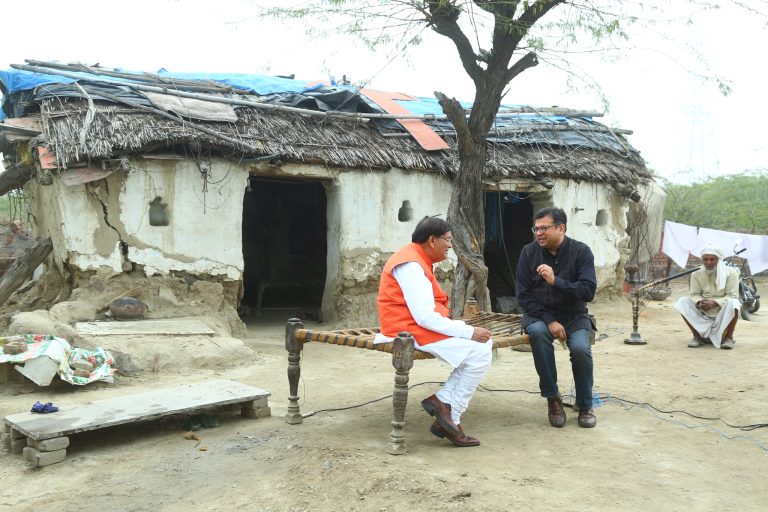
Empowerment - Those Who Walk The Talk!
Unfortunately, most development reports nowadays read like a game of buzzword bingo overflowing with words like Empowerment, holistic, participatory approach, and civil society. While many buzzwords have a seasonality to them, Empowerment has remained consistently prominent in reports and speeches; but has been tough to exemplify. So, I have set out to capture real-life examples of the practice of Empowerment that I can see, question and document.
As power is finite and does not grow on trees, Empowerment entails one losing and the other gaining control. It requires a sustained effort over time and almost always involves challenging society's existing power structures and norms. This is particularly challenging in societies where power is distributed unevenly across multiple axes - gender, caste, and faith.
I first heard of Dr Bindeshwar Pathak while working on a passion project to write children's books about Indians who made a global impact without leaving India. My minimalist mother suggested his name, claiming Dr Pathak's work is authentic and visible.
Dr Pathak's non-traditional ways of doing things attracted me as I studied the Sulabh Toilets movement. My many unannounced visits to Sulabh toilets, schools, vocationa centres, and ashrams in India verified a silent revolution of Empowerment. Numerous articles and books have discussed Dr. Pathak's work, and his desire to empower others stands out as a unifying theme.
Dr Bindeshwar Pathak is India's social reengineering guru. Born into a Brahmin family in Bihar, Dr Pathak worked with manual scavengers to understand their struggles and rehabilitate them through the Sulabh Toilets movement, which now spans India. Over fifty thousand people work at Sulabh, that too without any government grants or international aid.
While most associate the work of Dr Pathak with sanitation and toilets, the Empowerment of women seems to be his primary intent. Most manual scavengers in India are women, the biggest beneficiary of Sulabh's work. Many of these retrained women now maintain modern Sulabh toilets, while others have set up small businesses after receiving various vocational training and support. Each woman I met at Sulabh's training centre in Alwar, Rajasthan, told an inspiring story of Empowerment through skills and mentoring.
In 2012 Dr Bindeshwar Pathak appeared before the Supreme Court of India to argue that widows should have the same inheritance rights as any other family member and that denying them this right perpetuates the discrimination and mistreatment they face in society. As a result, the Supreme Court ruled that widows should be treated as legal heirs and granted the right to inherit property. When I spoke with widows from India and Nepal in the ashrams of Vrindavan that are supported by Dr Pathak, I understood the difference he has made in their lives. In these ashrams, I saw how the law and justice can empower.
The Sulabh International School in Delhi provides marginalised students with an excellent education. Additionally, it is the centre of a vast network of sanitation clubs throughout India. It provides girls and boys with knowledge on menstrual hygiene, inexpensive sanitary napkin production, and incinerators for discarded sanitary napkins. Dr. Pathak's emphasis on education is crucial for genuine Empowerment, as education reduces power imbalances.
Dr Pathak's appointment of Mrs Usha Chaumar as Sulabh's president is perhaps one of his most remarkable acts of Empowerment. For her sanitation work, the same woman, excluded from upper-caste homes until a few years ago, received the Padma Shree award. She now travels the world delivering motivational talks.
I admire Dr Bindeshwar Pathak's journey, which combines science, spirituality, and Gandhian philosophy. In the 1970s, this changemaker introduced pay-per-use public toilets to India's impoverished, giving them dignity. Dr Pathak believed that the poor are prepared to pay for good services if designed to satisfy their needs and limits. Half a century later, in 2011, Abhijit Banerjee and Esther Duflo's bestseller "Poor Economics" presented the same essential argument and earned them the Nobel Prize in Economics in 2019.
In a power-hungry world, real-life examples of Empowerment are precious. We should capture them and celebrate them. Until next time!
Dr Sunoor Verma is an international development strategist. He has advised WHO, UNICEF, UNDP, UNHCR, HUG-Geneva and Cambridge University on Strategy, Leadership Communication, Advocacy and Resource Mobilization. He has curated dialogue and partnership initiatives with parliamentarians in Macedonia, Malaysia, Kosovo, Germany, Switzerland, Australia, and Nepal. More on his work is on www.sunoor.net
Published in The Himalayan Times on 2nd May 2023