
Blogs

India's 2024 election: Seven promising trends
The Indian general elections of 2024, as always, are a spectacle of democracy on an epic scale. Here are seven remarkable trends that give me much hope as a citizen:
, India experienced good voter turnout over the summer months, with a considerable rise in participation from young people and first-time voters. This demonstrates a dynamic and engaged electorate eager to shape the country’s destiny. Young voters’ passion, in particular, indicates strong democratic involvement and a generational shift in political understanding and activism. The correlation between high temperatures and voter turnout is being studied and will hopefully guide future election scheduling.
, the 2024 Indian elections were a technological miracle, demonstrating how cutting-edge innovations can strengthen the democratic process and make it more transparent, secure, and efficient. Blockchain technology was used for voter registration for the first time, making it safe and tamper-proof. This enables voters to check their registration status using a blockchain-based app, preventing voting fraud. AI was also essential for election monitoring. AI algorithms analysed social media in real-time to flag disinformation and hate speech, ensuring a fair and peaceful election. AI-powered facial recognition confirmed voter identities at polling stations, speeding up and decreasing impersonation. Each polling location used electronic voting devices with voter-verifiable paper audit trails. This combination allows voters to validate their vote using a paper slip, improving electronic voting transparency and trust.
, these elections marked a significant step towards inclusivity, with a notable increase in women and candidates from marginalized communities contesting seats. According to the Election Commission of India, the number of women candidates rose 10% compared to the previous election. Moreover, candidates from Scheduled Castes, Scheduled Tribes, and other marginalized communities made significant inroads, highlighting a shift towards a more inclusive political landscape that better reflects India’s diverse demographic composition.
, the 2024 elections marked a groundbreaking shift towards environmental consciousness, making them the greenest in the nation’s history. The effort to reduce the environmental impact was evident across various facets of the electoral process. Political parties embraced digital platforms, significantly cutting down on paper use. Social media, mobile apps, and SMS campaigns replaced traditional posters, pamphlets, and flyers, drastically reducing the carbon footprint. When physical materials were necessary, eco-friendly alternatives took centre stage. Biodegradable banners, recyclable pamphlets, and natural dye inks became the norm. Several parties distributed seed paper pamphlets that voters could plant, symbolizing growth and sustainability.
Solar panels and other renewable energy sources powered polling stations, especially in remote areas. This ensured reliable power and underscored a commitment to sustainable practices. Campaign travel and logistics significantly shifted towards electric vehicles (EVs). Political leaders and campaign teams used EVs to minimize carbon emissions. Public transport incentives further supported this move, including discounted fares on election day for voters using electric taxis and buses.
, these elections made remarkable strides in ensuring every eligible voter could exercise their right to vote, regardless of physical ability or location. With about 2.21% of the population living with disabilities and many more facing mobility challenges, these efforts were crucial. The Election Commission of India took comprehensive measures to facilitate voting for people with disabilities, senior citizens, and those in remote areas. Mobile polling stations reached distant locations, and accessible voting equipment, like braille-enabled EVMs and ramps, became more common. India’s rapidly improving infrastructure played a key role. Better all-weather roads, enhanced public transportation networks, and wheelchair-accessible taxis made reaching polling stations easier for voters with mobility challenges. All these reflect a commitment to an inclusive democracy and set a new benchmark for accessibility and participation in the electoral process.
, despite ongoing tensions and disturbances in some parts, the 2024 Indian elections were largely peaceful, with minimal incidents of violence or disruption. This success is a testament to the dedication and bravery of India’s invisible administrative personnel and security servicemen and women. Their effective planning and coordination with law enforcement agencies ensured the elections could proceed smoothly, even in volatile areas. These unsung heroes worked tirelessly, often behind the scenes, to maintain peace and order, allowing voters to exercise their democratic rights safely. Ensuring that these services remain non-political, are incentivised appropriately and recognised is critical for the country’s democracy.
, the 2024 elections in India showcased the remarkable impact of having a stable majority government, leading to enhanced efficiency and effectiveness across various sectors. This was evident in how all ministries utilized their platforms, communication channels, and capabilities to the fullest to encourage voter participation, turning the elections into a grand celebration of democracy. In contrast, in India’s experience and neighbourhood, coalition governments often result in two steps forward and two steps back, if not three, due to their inherent instability and conflicting interests. The synergy between the government and corporate sector in driving voter education campaigns in 2024 also exemplifies how a stable government can enhance national initiatives, contributing to the vibrancy of India’s democracy.
Highlighting the positive aspects of India’s 2024 elections, the essence of “Sarvam Parartha Samgraha” rings true—’gather all learning for the greater good’. Despite the high transaction cost, especially for a diverse subcontinent-sized nation, India consistently bets on democracy in its long-term strategy. With innovation and a steadfast commitment to democratic values, the lessons from the 2024 elections can strengthen democracy in India and Bharat for generations to come.
Seven troubling trends in Indian elections 2024
As India votes in the 2024 elections, seven alarming trends that transcend party lines threaten the core of its democratic values and reflect systemic problems within the political sphere.
One of the most alarming tendencies in Indian politics today is accepting corruption as a necessary transaction cost.
Campaign conversations now revolve around the ‘decent’ per cent of kickbacks, indicating a broad acceptance of corruption. Across party lines, all major political parties have benefited from the electoral bonds system’s lack of transparency, which permits unlimited and anonymous donations, creating an environment conducive to corruption. Furthermore, recent corruption scandals involving officials from several political parties demonstrate the bipartisan nature of corruption.
Another alarming trend is the widespread acceptability of violence against women, both within and outside political parties. For example, India’s decorated female wrestlers protested harassment and sexual assault by a prominent politician by sitting on the pavements of Delhi for 4 months, 4 weeks and 1 day, before any serious inquiry was set up. Similarly, the tragic episode in Manipur in which women were paraded naked, as well as the big sex and video scandal in the opposition-ruled Karnataka state, highlight this troubling tendency. Furthermore, the current example of a female parliamentarian being allegedly abused at the home of Delhi’s Chief Minister, who also leads the country’s newest political party, highlights the rot. The absent or at best lethargic response of politicians to allegations of abuse by women showcases the systemic nature of the problem. Tragically this widespread acceptance of abuse stands in stark contrast to the hyper-targeted election campaigns by all parties vying for women’s votes.
Perhaps the most depressing trend is omitting critical nation-building issues like education, healthcare, and employment from the current election discourse. These fundamental issues are overlooked mainly by divisive rhetoric and populist promises. For example, in areas such as Uttar Pradesh and Bihar, political campaigns usually centre on caste and religion rather than tackling severe deficiencies in educational facilities and healthcare services. Similarly, in Maharashtra, while political disputes frequently revolve around regional identity and linguistic issues, the state continues to face farmer suicides and rural unemployment.
Despite electoral losses, Rahul Gandhi and Priyanka Gandhi Vadra remain influential in the Indian National Congress (INC). Regional dynastic politics is seen in Uttar Pradesh’s Samajwadi Party (SP), led by Mulayam Singh Yadav’s son Akhilesh. The Karunanidhi family controls Tamil Nadu’s Dravida Munnetra Kazhagam (DMK), with M.K. Stalin ruling after his father.
Not only established parties are affected. The Maharashtra Shiv Sena is likewise a family affair, with Uddhav Thackeray succeeding his father, Balasaheb Thackeray, and now his son, Aaditya. In Andhra Pradesh, the Reddy family dominates the Yuvajana Sramika Rythu Congress Party (YSRCP), with Y.S. Jagan Mohan Reddy trying to emulate his father. While the BJP has often criticized other parties, particularly the Congress, for dynastic politics, it has not been immune to the same practices. Nepotism within the BJP can be seen as a strategic move to consolidate power and ensure loyalty within the party ranks.
Indian politicians in power and opposition, frequently seek endorsements from abroad to validate their actions and ideas. This craving for international approval is evident in their eagerness to speak at prestigious universities and their emphasis on statements by world leaders that praise their initiatives. These are then highlighted in domestic media, projecting an image of global respect and intellectual recognition. However, this pursuit of international validation can obscure pressing domestic issues. Indian politicians’ reliance on foreign endorsements can divert attention from the critical issues that require urgent and sustained focus.
MLAs’ repeated floor-crossing has caused substantial political instability and governance issues in some states. This erosion of ideological loyalty erodes public trust and threatens the integrity of democratic institutions as voters increasingly struggle to rely on their elected leaders’ professed ideals.
The Sanskrit term Ātmānaṃ viddhi, or ‘Know thyself’, highlights the significance of deep self-awareness and introspection. It encourages a journey inside to find one’s actual nature and purpose. Perhaps Ātmānaṃ viddhi should be the united minimum programme of all political parties in India.
Holding leader's feet to the for women's empowerment
On International Women’s Day, leaders send hollow tweets, posts, and messages praising women’s empowerment. Cut through the noise and get to the point: are these leaders keeping their promises or faking them? When a male or female leader broadcasts a flowery message about women’s empowerment, ask them to answer my questions and then judge them. People say the proof is in the pudding.
Organizational leaders should report women’s representation across levels and answer why these percentages are low. Annual gender representation goals should be publicly posted. And feature in the annual corporate reports.
Act on wage equity instead of talking about it. Organizational leaders must disclose gender pay audits that identify and address discrepancies. Regulations like wage bands and standardized pay scales can reduce unconscious bias in compensation talks. Anything less is unacceptable.
Leaders must show they recruited diverse talent fairly and inclusively. Blind recruitment methods and diversity training for hiring managers prevent unconscious bias in the selection process. Furthermore, leaders should publicly state that they aggressively attract female leaders through focused recruitment.
Leaders must show they recruited diverse talent fairly and inclusively. Blind recruitment methods and diversity training for hiring managers prevent unconscious bias in the selection process. Furthermore, leaders should publicly state that they aggressively attract female leaders through focused recruitment.
Leaders who prioritize menstruation, nursing, and menopausal facilities show they understand and are committed to women’s unique challenges. Before offering free condoms in office restrooms, provide women’s hygiene products. Menstruation is not voluntary, but sex is!
Senior and sufficient women in any organizational redressal committee are essential for fair and successful workplace issue resolution. They are not just a matter of tokenism but a strategic need for workplace respect and accountability.
Chief Justice of India delivers a powerful in leadership communication
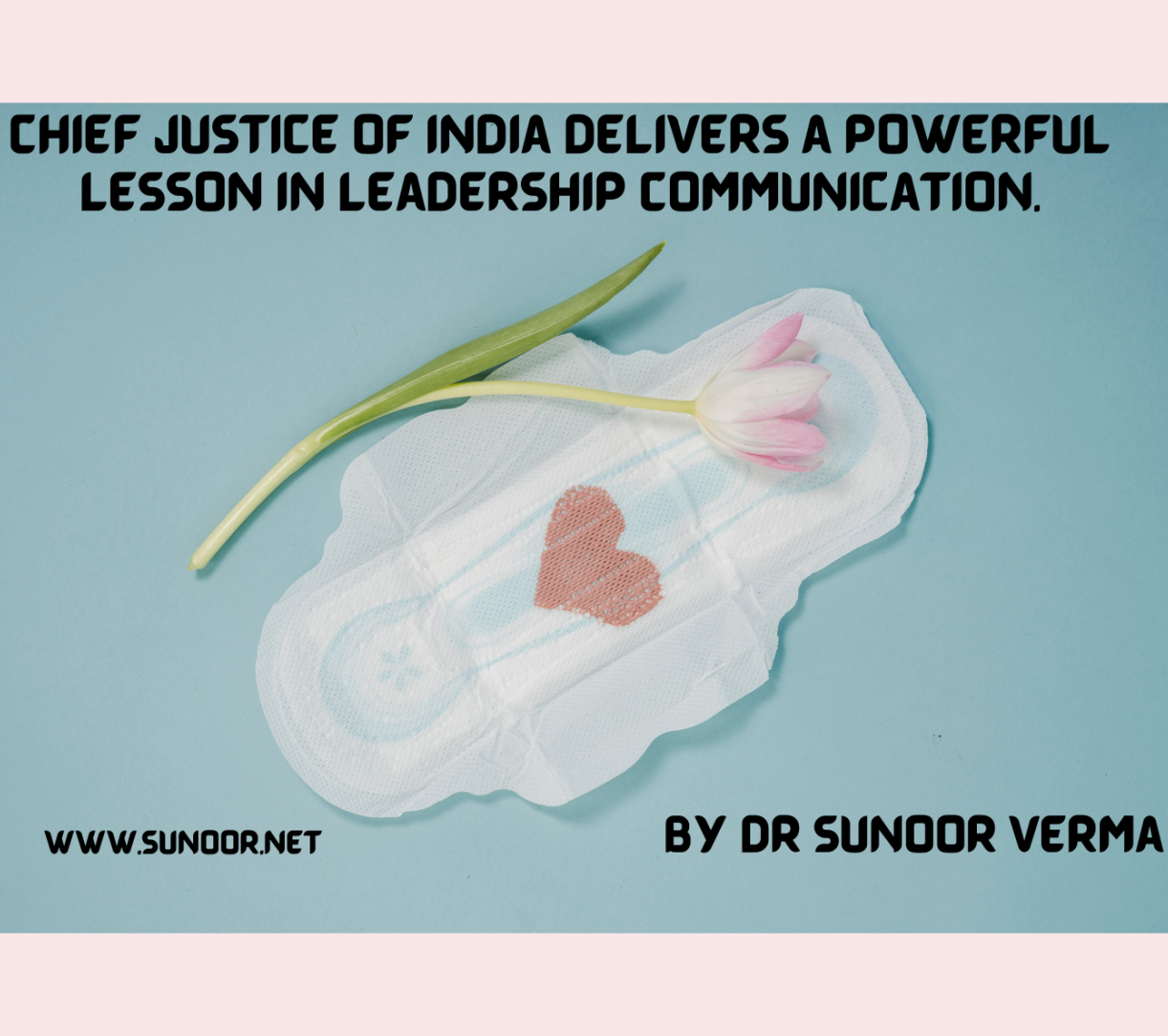
In his remarks at the 31st annual convocation of the National Law School Bangalore, Chief Justice of India DY Chandrachud displayed exceptional #leadershipcommunication qualities. In his remarks, CJI Chandrachud addressed the “taboo” topic of #menstruation and the difficulties that #women #lawyers confront in juggling their careers and personal lives. He also related a personal story about his late former wife being instructed to “find a husband who can manage household chores” when she inquired about working hours at a legal company.
In sharing this story, CJI Chandrachud was willing to discuss complex topics and challenge the status quo. He also showed that he is aware of women lawyers’ challenges and is committed to creating a more inclusive and supportive workplace for them.In the best-case scenario, male leaders address women’s issues on International Women’s Day or when requested to speak at a women-focused event. What lifted Dr Chandrachud’s speech to a leadership speech was that he mainstreamed women and their issues in a convocation speech. This sends a strong message to other leaders that women’s issues must take centre stage in New India.
Here are some of the exemplary leadership communication traits that CJI Chandrachud demonstrated in his speech:
Here are some of the exemplary leadership communication traits that CJI Chandrachud demonstrated in his speech:
Leaders’ silence on menstruation and other pro-women issues contributes to stigma, shame, and inequality. Women are less likely to discuss these issues, seek help, or access resources when they are taboo. This can devastate their physical and Menstruation-related discrimination is a long-standing issue in the workplace that has received little attention. It is vital to remember that Menstruation-related job discrimination:
Menstruation-related discrimination is a long-standing issue in the workplace that has received little attention. It is vital to remember that Menstruation-related job discrimination:
Pm Modi's masterclass in leadership communication
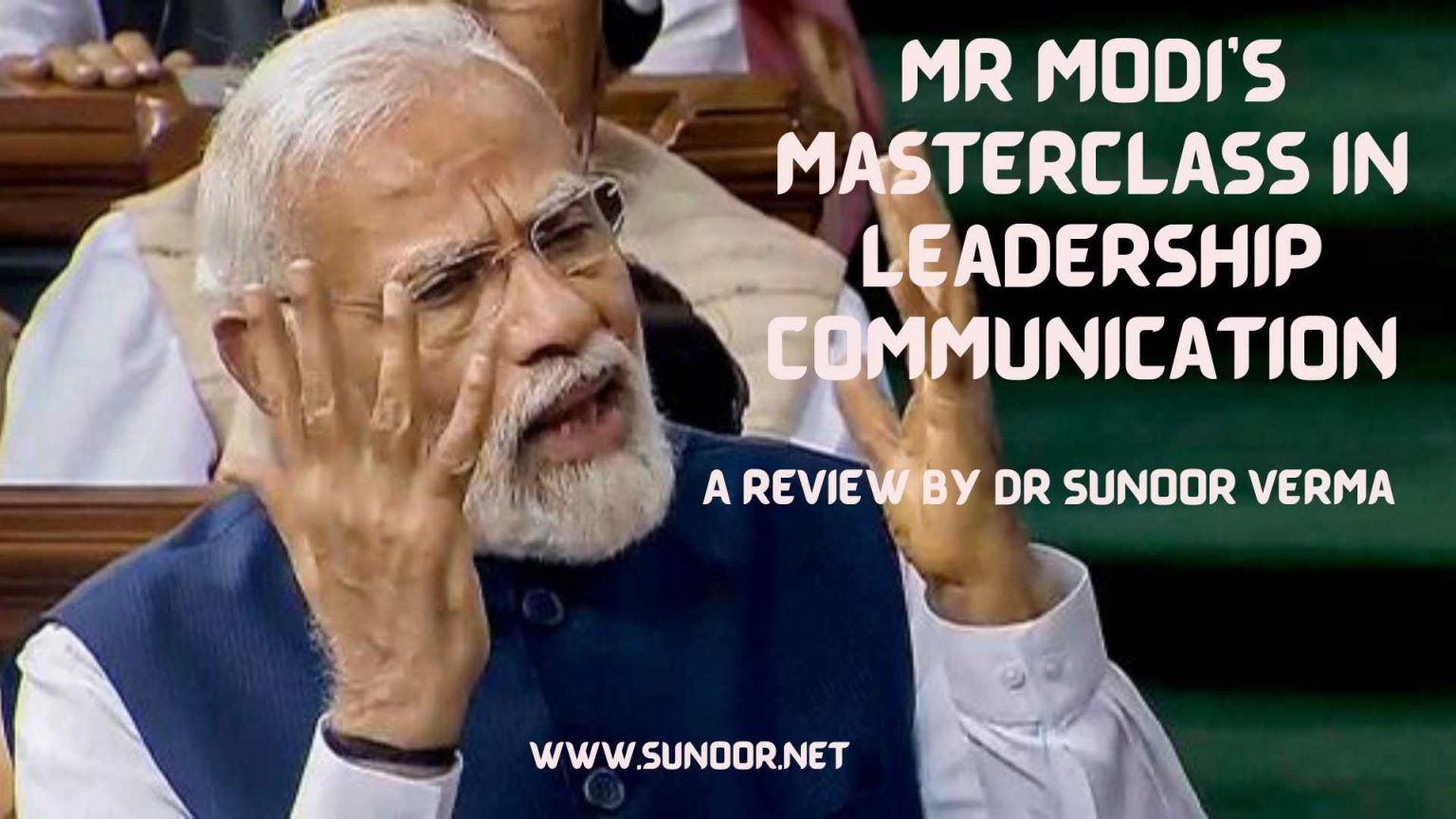
India’s Prime Minister, Mr Narendra Modi, delivered a master class in political #LeadershipCommunication in parliament on August 10, 2023, when a no-confidence resolution was presented against his administration. Mr Modi accused the opposition of having no faith in India, believing those who mocked the country, and being arrogant and incompetent. He also stated that the more they tried to stop him, the more successful he became.
: First and foremost, it was well-timed. The no-confidence resolution was introduced two days after Mr Modi’s party, the BJP won the municipal by-elections in Gujarat. This allowed Mr Modi to capitalize on the BJP’s momentum and depict the opposition as out of touch with the country’s spirit. As a result, this speech can also be classified under #StrategicCommunication.
: First and foremost, it was well-timed. The no-confidence resolution was introduced two days after Mr Modi’s party, the BJP won the municipal by-elections in Gujarat. This allowed Mr Modi to capitalize on the BJP’s momentum and depict the opposition as out of touch with the country’s spirit. As a result, this speech can also be classified under #StrategicCommunication.
: Mr Modi addressed his remarks with passion and conviction. He addressed the people personally and stated unequivocally that he would not back down from the opposition’s challenges. This added urgency and enthusiasm to his address, which helped energize his followers.
How He Used Rhetorical Devices to Connect with the Audience Mr Modi’s grasp of Hindi was a significant asset in the no-confidence vote. Despite being a non-native speaker, he could communicate with his audience in Hindi fluently and confidently. In contrast, his opponents were not fluent in Hindi and frequently made errors. This enhanced Mr Modi’s credibility and intelligence, giving him an advantage in the argument.
Mr Modi’s body language, in addition to his rhetorical abilities, contributed to the effectiveness of his speech. He conveyed confidence, authority, and determination through various nonverbal cues.
Here are some specific examples of how Mr Modi’s body language worked in his favour: Mr Modi’s outfit also contributed to his image of power and confidence. The white kurta-pyjama represents purity, but the Nehru jacket represents power and authority. This confluence of symbols aided Mr Modi in projecting an image of a strong and capable leader who was in touch with the people. His formal dress made him appear more powerful and in charge when he accused the opposition of being out of touch with the people. Similarly, as he discussed India’s accomplishments, his immaculate dress made him appear proud and confident. On the other hand, his projected opponent wore a white half-sleeve shirt that conveyed informality and casualness.