Sunoor Logo
  • home
  • about
  • What
  • Where
  • When
  • With Whom
  • What They Say
  • Blogs
  • Videos
  • Merci
  • Contact

Blogs

Learning from Rwanda's Rise: Insights From The Kigali Global Dialogue Forum 2023

For Healthy & Happy Kids, Reduce Screentime Now!

For Healthy & Happy Kids, Reduce Screentime Now!

Sex Education For Boys Is Good For National Economics

Health Communication Fatigue Looms Large

Health Communication Fatigue Looms Large

Empowerment - Those Who Walk The Talk!

Empowerment - Those Who Walk The Talk!

Archives

  • 2015
  • 2020
  • 2022
  • 2023
  • 2024

Categories

  • COVID 19
  • Education
  • Emerging Health Issues
  • Global Health
  • Health Systems Strengthening
  • Leadership Communication
  • Practical Health
  • Private Public
  • Public Health
  • Strategic Communication
  • Uncategorized
17 August 2023

Learning from Rwanda's Rise: Insights From The Kigali Global Dialogue Forum 2023

INTERVIEW WITH DR SUNOOR VARMA
Global Development Strategist and Leadership Communication expert
The developmental experiences of Rwanda and their applicability to countries such as Nepal are explored in an interview with Dr Sunoor Verma.
The Kigali Global Dialogue Forum is a one-of-a-kind forum that brings together representatives from developing countries to discuss major global issues. It is organised by India's Observer Research Foundation (ORF) and the Rwanda Governance Board. Set against Rwanda's incredible growth and development, this selected event focuses on inclusive conversation, bringing varied perspectives, and supporting gender equity. The critical findings are the importance of open discussions, regional alliances, and issue-based collaborations among developing nations.

Dr Sunoor Verma: The Kigali Global Dialogue is a truly unique platform for debate that is convened by two highly credible organisations, the Observer Research Foundation, India and the Rwanda Governance Board, and it brings together a diverse range of voices from developing countries. This dialogue is known for ensuringa significant presence of women speakers, which is not always the case at international events."
Another thing that makes the Kigali Global Dialogue special is that it's held in Rwanda, one of Africa's fastest-growing economies. It's an inspiring place to be, giving us a glimpse of what's possible for developing countries.
The topics discussed at the Kigali Global Dialogue are also very bold. They don't shy away from complex issues; participants can express their views without worrying about pleasing donors or funding sources. This makes for a candid exchange of ideas essential for developing countries.
The Kigali Global Dialogue is an invaluable platform for developing countries to come together, discuss critical issues, and learn from each other's experiences. I'm grateful for the opportunity to participate in this year's event, and I look forward to returning.
Can you share some insights that you gained from participating in the dialogue?
Dr Sunoor Verma: One of the most significant insights I gained from the dialogue was the continued relevanceof dialogue between developing countries. Too often, the conversation about development is dominated by developed countries, who may not always understand the unique challenges and opportunities facing developing countries. The Kigali Global Dialogue was a refreshing change of pace, as it was a platform for developing countries to come together and share their experiences. This was incredibly valuable; we could learn from each other and build relationships. Another insight I gained was the importance of regional alliances and issue-based alliances. In today's world, it is no longer enough to focus on national development simply. We need to work with our neighbours and countries facing similar challenges. This is the only way to achieve sustainable development. The Kigali Global Dialogue was a wake-up call for many. It is a sobering reminderthat developing countries have the power to shape their destiny. We must continue coming together, sharing our experiences, and building alliances. Together, we can create a better future for all as long as there are credible hosts, such as the Observer Research Foundation and the Rwanda Governance Board, whose intentions are trusted.
So the dialogue was held in Rwanda, and its Kigali Global Dialogue and such dialogues have helped the country garner international attention; so can you elaborate on how these dialogues have effectively promoted Rwanda's achievements and helped foster global engagement?
Dr Sunoor Verma: The Kigali Global Dialogue is a powerful asset for Rwanda to showcase its achievements to the world without being a pony show. It brings together a wide range of influential people from all over the world who get to see firsthand Rwanda's progress in recent years. This year's dialogue, for example, brought together people from over 70 countries. They had the opportunity to learn about Rwanda's economic growth, its commitment to good governance, and its progress in education and healthcare. They also had the chance to meet with Rwandan policymakers and business leaders and discuss ways to collaborate on future projects. However, The Kigali Global Dialogue is not just about promoting Rwanda's achievements. It is also about fostering global engagement. When policymakers and business leaders worldwide come together in Kigali, they can build relationships and share ideas. This can lead to new partnerships and new development opportunities.
Rwanda has made some significant improvement in development despite the genocide that occurred not long ago, so what are the factors or strategies that do you believe contributed to Rwanda's transformation into current Africa's fastest developing nation?
Dr Sunoor Verma: Rwanda's transformation always inspires me; it is a remarkable story of how a country can overcome a horrific past and build a brighter future. Many factors have contributed to Rwanda's success, but I believe the most important ones are visionary leadership, good governance, and investment in human capital. President Paul Kagame has been a visionary leader for Rwanda. He has articulated a clear vision for the country's future and has been committed to implementing it. He has also created a robust, stable government focused on good governance and transparency. This has created an environment where businesses can thrive, and people can live in peace and security.
Rwanda has also invested heavily in education and healthcare. This has led to a significant improvement in the quality of life for its citizens. The country now has one of the highest literacy rates in Africa and is also making progress in reducing poverty and malnutrition. Rwanda is also a leader in gender equality, with women making up more than half of the parliament. I am confident that Rwanda will continue to thrive in the future.
I speak passionately about Rwanda's transformation because it is a model for other developing countries. The principles of visionary leadership, good governance, gender equity and investment in human capital are the same principles that I believe can be applied to other developing countries.
As you said, the society was torn from violence and ethnicity, and now it is embracing its unity; that transition is indeed remarkable for a landlocked country or small country like Rwanda, so what do you believe are the key factors that enable this transition and how can other countries with a similar situation, similar socio-economic problems can learn from Rwanda's experience.
Dr Sunoor Verma: Rwanda's transition from a country torn by violence and ethnicity to embracing unity is remarkable. It is a story of how a country can overcome a complicated past and build a brighter future. Many factors have contributed to Rwanda's success, but the most important ones are leadership, reconciliation and gender equality.
Leadership is essential for any country that wants to achieve its goals. President Paul Kagame has understood the importance of Reconciliation in Rwanda and has taken steps to promote it. He has also committed to gender equality, and women now play a leading role in all aspects of Rwandan society.
Reconciliation is another essential ingredient for peace and unity. Rwanda has taken several steps to promote Reconciliation, including creating a system of local courts and local bodies to help people reconcile with each other. The country has also integrated the issue of Reconciliation into its school curriculums.
Gender equality is also essential for peace and unity. When women are empowered, they are more likely to be involved in decision-making and promote peace. Rwanda has made significant progress in gender equality; women now comprise more than half of the parliament.
Reconciliation is a difficult process, but it is critical in countries that have suffered genocide or other mass tragedies. It is the only way to fully move past the past and create a better future for everyone. Reconciliation does not imply ignoring the past. It is about remembering the past in order to create a better future. It is about acknowledging the grief and suffering inflicted and working together to find a way forward. It is a matter of forgiveness, not forgetting. It is about justice, but not about vengeance. It is a process of healing, not forgetting.
Rwanda has focused a lot on agricultural development to progress since the genocide. Nepal is also an agro-based country, so what methods used by the people of Rwanda can be applicable for Nepal to develop agriculturally?
Dr Sunoor Verma: Rwanda is a remarkable example of a country that has transformed itself from a low-income, post-conflict country to a high-performing economy in just two decades. One of the key drivers of this transformation has been Rwanda's focus on agricultural development.
Rwanda has invested heavily in agriculture, both in terms of infrastructure and technology. The country has built a network of irrigation canals and dams and introduced new technologies such as drip irrigation and solar-powered pumps. This has helped to increase agricultural productivity and reduce vulnerability to drought.Rwanda has also invested in agricultural research and development. The country has established several agricultural research centres and partnered with international organisations such as the International Maize and Wheat Improvement Center (CIMMYT) to develop new varieties of crops resistant to pests and diseases.
In addition to infrastructure and technology, Rwanda has also focused on good governance and gender equity in agriculture. The government has put in place many policies to promote women's participation in agriculture and has also made efforts to reduce corruption in the agricultural sector.
As a result of these investments, Rwanda has achieved significant progress in agricultural development. The country's agricultural output has doubled in the past two decades, and poverty has been reduced by half.
Nepal can learn a great deal from Rwanda's experience in agricultural development. Nepal is also agro-based, facing many of the same challenges as Rwanda. However, Nepal has the potential to achieve similar results if it invests in infrastructure, technology, good governance, and gender equity in agriculture. I am confident that Nepal can follow in Rwanda's footsteps and transform into a high-performing economy. It is only a matter of commitment and determination.
For a country like Nepal which is quite similar to Rwanda as it has faced many transitions in the political system, it is now a democratic country experiencing several changes in the political system. So in your view, what aspects of Rwanda's governance leadership and policies can benefit countries like Nepal facing similar political changes
Dr Sunoor Verma: I have been impressed by Rwanda's progress in recent years, and I believe that the country has much to offer other developing countries facing similar political changes.
One of the most striking things about Rwanda is its political vision. The government has a clear and long-term plan for the country and has been able to implement this plan effectively. This is in contrast to many other developing countries, which often have frequent changes of government and lack a clear vision for the future.
Another critical aspect of Rwanda's governance is its political stewardship. The government has channelled international support and technical assistance in a way that has benefited the country as a whole. This contrasts with many other developing countries, where international aid is often fragmented and does not reach the people who need it most.
Finally, Rwanda has made significant progress in gender equality. This contrasts with many other developing countries, where women, including Nepal, are still underrepresented in decision-making roles.
I believe these three aspects of Rwanda's governance can benefit other developing countries facing similar political changes. If these countries can create a clear vision for the future, channel international support effectively, and promote gender equality, they can achieve significant progress in their development.
I am particularly passionate about the issue of gender equality. I believe that when women are empowered, they can make a real difference in the development of their countries. Rwanda is an excellent example of a country that has benefited from gender equality. I hope other developing countries will follow Rwanda's example and allow women to lead their societies.
As you said before, Rwanda has garnered a lot of tourist attention. Nepal is also a little bit inclined towards tourism development. It is trying to develop more tourism in the country. It has more tourist attractions than Rwanda, but still, it is not as successful as Rwanda. So what could be the cause behind it and what steps can Rwanda take, and what methods that Rwanda has applied can be applicable in Nepal in developing the tourism sector?
Dr Sunoor Verma: Nepal is a beautiful country with a lot to offer tourists, but it has not been as successful as Rwanda in attracting tourists. If we analyse how Rwanda has achieved this feat of attracting high-value, high, spending tourists, we will find that the answers lie in good governance, branding, and infrastructure.
Good governance: Rwanda has a reputation for being a well-governed country with low levels of corruption. This is important for tourism, as tourists want to feel safe and secure when they travel. Lesson number one- Corruption deters high-spending tourists from visiting a country.
Branding: Rwanda has done an outstanding job branding itself as a tourist destination. The country is known for its gorillas, beautiful scenery, and friendly people. The lesson, Two: Political and economic instability is not conducive to solid branding.
Infrastructure: Rwanda has invested heavily in infrastructure, such as roads, airports, and hotels. This makes it easy for tourists to get around the country and enjoy their visit. Lesson, Three: infrastructure for safe connectivity and secure accommodation is critical.
In addition to these three areas, Nepal can also improve its tourism sector by addressing the following issues:
Gender equality: Nepal has a long history of gender inequality. This can deter female tourists from visiting the country. Nepal needs to do more to promote gender equality and to create a more welcoming environment for female tourists.
Sustainable tourism: Nepal needs to develop sustainable tourism practices. This will help to protect the environment and to ensure that tourism benefits the local community.
I believe that Nepal has the potential to become a significant tourist destination. However, it needs to address its challenges to realise its full potential.
Lastly, what do you think, methods or formulas Rwanda used to be this successful within two decades? And how would you compare their political system and their development with Nepal's development?
Dr Sunoor Verma: I have been working in international development for over 20 years and have seen many countries progress, but Rwanda is one of the most impressive success stories. In just two decades, Rwanda has transformed from a country ravaged by genocide to a thriving and prosperous nation.
Many factors have contributed to Rwanda's success, but I believe that the following are the most important:
Evidence-based decision-making: Rwandan leaders have committed to using evidence to guide their decisions. This means that they have invested in research and analysis and are willing to change course if the evidence shows that they are on the wrong track.
Political will: Rwandan leaders have shown a strong commitment to development. They have made it a priority to improve the lives of their citizens, and they have been willing to make difficult decisions to achieve their goals. There appears to be an agreement among the politicians of Rwanda on a common minimum national interest agenda.
Gender equality: Rwanda has made significant progress in gender equality. Women comprise more than half of the parliament, leading in all aspects of society. This has helped to create a more just and equitable society, and it has also contributed to economic growth.
Public participation: Rwandan leaders have committed to public involvement. They consult with citizens regularly, and they are responsive to their feedback. This has helped build trust between the government and the people, making it easier to implement reforms.
Finally, the Rwandan leadership has maintained stewardship of its National Development agenda and has not allowed foreign interference while being open to considering global best practices.
Published in Polar News, Nepal on 17 August 2023

Blogs Image
18 March 2023

For Healthy & Happy Kids, Reduce Screentime Now!

Unreasonable screentime threatens children's mental and physical well-being and is a significant parenting challenge today! According to the World Health Organization (WHO), 10% of youngsters over the globe suffer from mental problems. This is especially troubling, considering that childhood and adolescence are crucial periods for mental health. The brain undergoes significant growth and development during this period. Children and adolescents develop cognitive and social-emotional skills that influence their future mental health and are crucial for adopting adult roles in society.
Early adverse experiences in homes, schools, or digital places, such as exposure to violence, the mental illness of a parent or other caregiver, bullying, and poverty, raise the likelihood of developing mental illness. In addition, too much time spent in front of a screen has been related to sleep deprivation, speech delays, poor social skills, and other life issues. When screentime becomes an all-consuming pastime for youngsters, this is dubbed screen addiction.
WHAT IS UNREASONABLE SCREENTIME AND SCREEN ADDICTION?
Screen addiction describes the compulsive and excessive use of electronic devices such as smartphones, tablets, and laptops. While technology has undoubtedly made our lives easier, it has also had several detrimental implications, notably regarding mental health. Children are vulnerable to screen addiction, which can harm their mental health.
Addiction symptoms include the inability to stop taking the substance or when the substance's use begins to interfere with one's life or relationships. The symptoms are identical when it comes to youngsters and screens.
HOW DOES SCREEN ADDICTION IMPACT HEALTH?
The increased risk of developing anxiety and despair is one of the most significant ways that screen addiction impacts children's mental health. Excessive screen usage is related to elevated levels of stress, anxiety, and depression in youngsters, according to research. This is due to several factors, including the social isolation that frequently results from excessive use of electronic devices, the overstimulation of the brain that occurs when children are exposed to an excessive amount of visual and auditory stimuli, and the disruption of sleep patterns that can arise when screens are used too close to bedtime.
Your child's danger of being exposed to cyberbullying and pornographic material increases as they spend more time on phones and other screens. Similarly, more time spent on social media is frequently associated with sadness and internalizing issues. In addition, spending more time in front of a screen is associated with a decrease in parental bonding, according to scientific research.
THE NEGATIVE IMPACT OF UNREASONABLE SCREENTIME ON PHYSICAL HEALTH
In addition to harming children's mental health, screen addiction can negatively impact their physical health. For instance, children who spend an excessive amount of time seated in front of screens are at risk for acquiring obesity, which is related to a variety of physical and mental health issues. In addition, excessive screen time can result in eye strain, headaches, and other physical pain, exacerbating stress and anxiety.
Reducing screen time for children can be challenging, mainly when screens are often used for entertainment and educational purposes. However, here are some practical tips for reducing screentime for children.


WHAT CAN PARENTS DO TO MANAGE SCREEN TIME FOR CHILDREN?
Parents and caregivers must actively supervise their children's screen time to reduce their excessive use of electronic devices. Establishing explicit guidelines and limits for screen use is one approach to this. For instance, parents may limit screen usage to a set number of hours per day or require screens to be turned off at least one hour before bedtime.
KEY TIPS

  1. Use parental controls on the devices: Parental controls can effectively limit screentime and restrict access to certain apps or websites. Parents can use parental control features on devices or install third-party apps to help monitor and control their children's screentime.
  2. Encourage youngsters to participate in activities that support their physical and mental health as another method for reducing screen addiction. This could be outdoor play, reading, artistic pursuits, or time spent with friends and family. In addition, parents may limit the amount of time their children spend in front of screens and create healthy behaviours by encouraging their children to participate in these activities.
  3. Establish tech-free zones at home: Establishing tech-free zones in the home, such as the dining table or the bedroom, can aid in reducing the amount of time youngsters spend in front of devices. In addition, to foster more face-to-face engagement and family time, parents can advise youngsters to leave their devices in another room during these times.
  4. Finally, parents may exhibit responsible screen use. Children typically emulate their parents' behaviour; therefore, if parents are constantly checking their phones or watching television, it is conceivable that their children will do the same. By demonstrating appropriate screen usage, parents can provide a positive example for their children and encourage the development of mental and physical health-promoting activities.


ACTION POINTS FOR ADVOCACY ORGANISATIONS
Organisations advocating for children's mental health need to develop new strategies to integrate screentime advocacy into their mandate. Similarly, strategic partnerships in the public and private sectors must be established to address the growing challenge of screen addition.
Published by Radio Nepal on 18 March 2023

ABOUT THE AUTHOR
Dr Sunoor Verma is a global health practitioner. He has advised WHO, UNICEF, UNHCR, HUG-Geneva and Cambridge University on Strategy, Leadership Communication, Advocacy and Resource Mobilization. He has set up and led the country and regional operations for the European Centre for Minority Issues in the Balkans. He has supported track two peace processes in Macedonia, Kosovo and Sri Lanka and emergency response to the Tsunami, Avian Influenza and COVID-19. He has taught Global Health at Boston University. He has curated partnership initiatives with Macedonia, Kosovo, Germany, Switzerland, Australia, and Nepal parliamentarians. He divides his time between the foothills of the Jura Mountains in France and Buddhanilkantha in Nepal.


ADDITIONAL RESOURCES

1. Here is a fantastic article with a step-by-step "How to.. " Guide to screen addictions and responsible digital use by Holly Nibllet. In this article, the author discusses the advents in technology and how to control mobile screen time. How COVID-19 has changed our viewing habits, along with screentime data for children from the UK, is presented.

2. Published in 2019 is another practical guideline Digital Guidelines: Promoting Healthy Technology Use for Children by the American Psychological Association.

3. The American Academy of Pediatrics has established recommendations for children's media use. Their current recommendations advise:

■ For children under 18 months, avoid screen-based media except video chatting.

■ For children 18 months to 24 months, parents should choose high-quality programming and watch with their children.

■ For children 2 to 5, limit screentime to one hour per day of high-quality programming.

■ For children 6 and up, establish consistent limits on the time spent using media and the types of media.

4. A documentary worth watching is by Carlota Nelson, director of the documentary Brain Matters, which explores why too much screentime can harm babies and the importance of ensuring children enjoy off-screen experiences. Also, check out her engaging interview on the thinking behind this film.
31 July 2023

Sex Education For Boys Is Good For National Economics

WHAT IS SEXED?
Sex education is a powerful tool that equips young individuals with accurate information about sexual and reproductive health. Beyond its social and health benefits, comprehensive sex education for boys also holds significant potential to impact a nation's economy positively.


PATRIARCHAL NORMS IN SOUTH ASIA
In the unique cultural context of South Asia, where gender disparities prevail, focusing on sex education for boys becomes crucial. The region is characterized by deeply ingrained patriarchal norms and traditional gender roles, perpetuating unequal power dynamics in relationships and fostering unhealthy behaviours. Sex education can challenge these norms, promoting respectful attitudes towards women and encouraging gender equality. The rise in violence against women in developing countries is a serious problem that has several causes, including poverty, inequality, and harmful gender norms. One of the most critical factors contributing to this problem is the lack of comprehensive sex education for boys.


DISTURBING EVIDENCE
Of course, sex education is essential for girls as well. However, the specific challenges facing boys in South Asia make it especially important to engage them in this conversation. There is ample data to show that boys in South Asia are more likely to be the perpetrators of sexual violence, to be infected with HIV and other Sexually Transmitted Infections (STIs), and to be marginalized from sexual health services.
Disturbing statistics released by the United Nations Population Fund (UNFPA) in its 2023 'The State of the World's Population Report' shed light on the lack of sex education in South Asia. Merely 20% of schools in the region offer sex education, and only 10% provide comprehensive information on contraception, STIs, and abortion.


CONSENT, COMMUNICATION, AND MUTUAL RESPECT
Comprehensive sex education goes beyond the physical aspects of sexuality and focuses on building healthy and respectful relationships. Educating boys about consent, communication, and mutual respect can lead to more fulfilling and equitable partnerships, contributing to healthier family dynamics and societal harmony.
Unintended pregnancies and STIs pose significant challenges in South Asia. The adolescent birth rate in the region, at 22 births per 1,000 girls aged 15-19, is the highest in the world, partly due to limited information about contraception and reproductive health among boys. Educating boys about STIs and prevention strategies can make significant progress in controlling their spread.
By promoting attitudes of respect, consent, and gender equality, sex education for boys also plays a crucial role in breaking the cycle of gender-based violence, including intimate partner violence and early marriages. According to the World Health Organization's (WHO) 'Global Status Report on Violence against Women and Girls' of 2022, 37% of women in South Asia have experienced physical or sexual violence from an intimate partner. Educating boys about the importance of non-violence and respect for women can contribute to advocating for a safer and more inclusive society.
Furthermore, comprehensive sex education empowers boys to understand their responsibilities as fathers and be actively involved in their children's lives. This can improve child well-being, family outcomes, and a more stable and prosperous society.


POVERTY NOT AN EXCUSE
Despite challenges like poor schools and untrained teachers, introducing and strengthening sex education is imperative. Governments should collaborate with non- governmental organizations, international agencies, and community leaders to provide supplementary training and resources. Online resources and educational materials should complement classroom instruction.


GROWING NATIONAL PRIDE- AN OPPORTUNITY
Governments in South Asian countries are increasingly embracing their ancient civilizations and cultural heritage in school curriculums to foster national pride. As part of this growing trend, they can draw inspiration from their historical sex education practices and combine them with modern scientific knowledge to introduce comprehensive sex education in schools. Ancient traditions, like teachings from the Kamasutra in India, tantric practices connecting sexual energy with spiritual growth in India and Nepal, and temple art portraying human sexuality in India, Sri Lanka, and Myanmar, offer valuable insights. Additionally, specific tribal communities in India, Bhutan, and Nepal marked boys' transition to manhood with ceremonies that included teachings about adult responsibilities, including those related to sexuality, marriage, and family life. Ancient Hindu scriptures such as the Kamasutra, Mahabharata, Arthashastra and the Upanishads highlight the broader principles of respect, mutual understanding, and responsible behaviour within relationships. While not explicitly promoting modern sex education, these principles can serve as a foundation for discussing sexual health, consent, and maintaining harmonious relationships in contemporary contexts. By blending this traditional wisdom with modern evidence-based approaches, these South Asian countries must offer relevant and age-appropriate sex education, empowering their youth with knowledge and promoting responsible attitudes toward sexual health and relationships.
Integrating sex education into the curriculum addresses social issues and has significant economic implications, as an informed and accountable youth can contribute to a more stable and prosperous society.


BEST PRACTICES FROM POOR COUNTRIES EXIST
Several developing countries have successfully implemented comprehensive sex education programs for boys, promoting responsible sexual behaviour, reproductive health, and gender equality. In the late 1990s, Brazil launched successful sex education initiatives alongside discussions about gender equality and healthy relationships leading to significant improvements in reducing teenage pregnancies and the prevalence of sexually transmitted infections among adolescents. The Kenyan government has integrated comprehensive sex education into the national curriculum, covering topics such as reproductive health, family planning, and HIV prevention. Thailand has a comprehensive sex education curriculum that has contributed to a decline in teenage pregnancies and a reduction in HIV transmission rates among young people.
Furthermore, comprehensive sex education empowers boys to understand their responsibilities as fathers and be actively involved in their children's lives. This can improve child well-being, family outcomes, and a more stable and prosperous society.


POVERTY NOT AN EXCUSE
Despite challenges like poor schools and untrained teachers, introducing and strengthening sex education is imperative. Governments should collaborate with non- governmental organizations, international agencies, and community leaders to provide supplementary training and resources. Online resources and educational materials should complement classroom instruction.


GROWING NATIONAL PRIDE- AN OPPORTUNITY
Governments in South Asian countries are increasingly embracing their ancient civilizations and cultural heritage in school curriculums to foster national pride. As part of this growing trend, they can draw inspiration from their historical sex education practices and combine them with modern scientific knowledge to introduce comprehensive sex education in schools. Ancient traditions, like teachings from the Kamasutra in India, tantric practices connecting sexual energy with spiritual growth in India and Nepal, and temple art portraying human sexuality in India, Sri Lanka, and Myanmar, offer valuable insights. Additionally, specific tribal communities in India, Bhutan, and Nepal marked boys' transition to manhood with ceremonies that included teachings about adult responsibilities, including those related to sexuality, marriage, and family life. Ancient Hindu scriptures such as the Kamasutra, Mahabharata, Arthashastra and the Upanishads highlight the broader principles of respect, mutual understanding, and responsible behaviour within relationships. While not explicitly promoting modern sex education, these principles can serve as a foundation for discussing sexual health, consent, and maintaining harmonious relationships in contemporary contexts. By blending this traditional wisdom with modern evidence-based approaches, these South Asian countries must offer relevant and age-appropriate sex education, empowering their youth with knowledge and promoting responsible attitudes toward sexual health and relationships.
Integrating sex education into the curriculum addresses social issues and has significant economic implications, as an informed and accountable youth can contribute to a more stable and prosperous society.


BEST PRACTICES FROM POOR COUNTRIES EXIST
Several developing countries have successfully implemented comprehensive sex education programs for boys, promoting responsible sexual behaviour, reproductive health, and gender equality. In the late 1990s, Brazil launched successful sex education initiatives alongside discussions about gender equality and healthy relationships leading to significant improvements in reducing teenage pregnancies and the prevalence of sexually transmitted infections among adolescents. The Kenyan government has integrated comprehensive sex education into the national curriculum, covering topics such as reproductive health, family planning, and HIV prevention. Thailand has a comprehensive sex education curriculum that has contributed to a decline in teenage pregnancies and a reduction in HIV transmission rates among young people.
Comprehensive sex education is not a silver bullet but an essential tool for preventing violence against women and building a more just and equitable society for all. Investing in comprehensive sex education for boys is a matter of social responsibility and has profound economic implications. By empowering the youth with knowledge and fostering responsible attitudes toward sexual health and relationships, South Asian countries can pave the way for a more informed, equitable, and prosperous future.
After all, sex education is like fire prevention. You may not need it today, but you'll be glad you had it if you do!
By Dr Sunoor Verma
Published in print and online in The Himalayan Times on 31st July, 2023
Posted in Education, Global Health, Public Health, Sexual Reproductive Health 

Blogs Image
16 March 2023

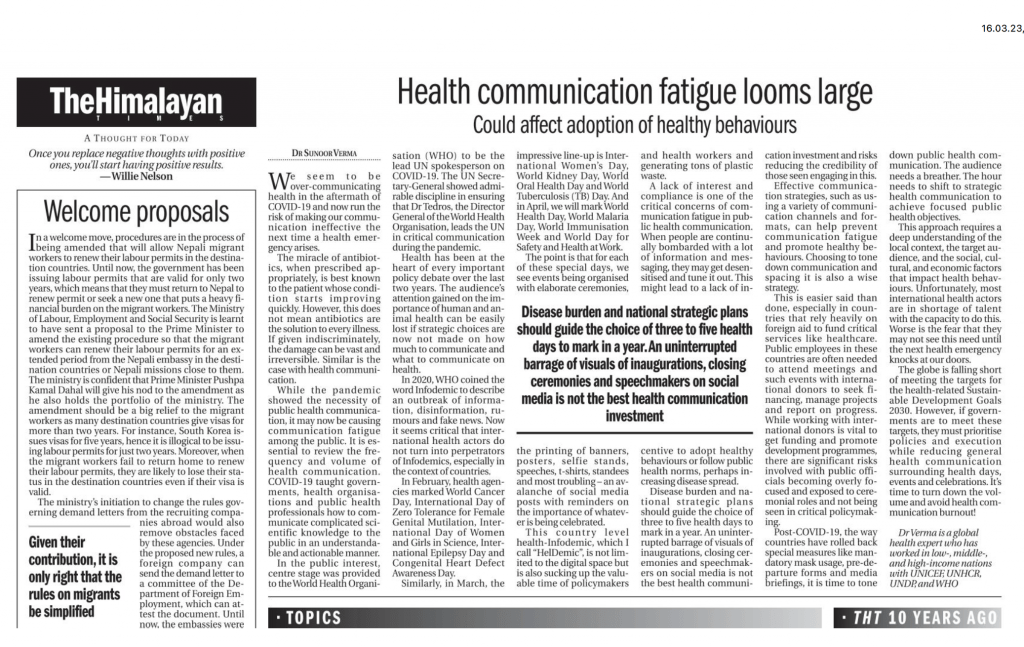
Health Communication Fatigue Looms Large

OVER-COMMUNICATING HEALTH-CAN IT EVER BE COUNTERPRODUCTIVE?
We seem to be over-communicating health in the aftermath of COVID-19 and now run the risk of making our communication ineffective the next time a health emergency arises. The miracle of antibiotics, when prescribed appropriately, is best known to the patient whose condition starts improving quickly. However, this does not mean antibiotics are the solution to every illness. If given indiscriminately, the damage can be vast and irreversible. Similar is the case with health communication.


THE RISK OF COMMUNICATION FATIGUE
While the pandemic showed the necessity of public health communication, it may now be causing communication fatigue among the public. It is essential to review the frequency and volume of health communication. COVID-19 taught governments, health organisations, and public health professionals how to communicate complicated scientific knowledge to the public in an understandable and actionable manner.
In the public interest, centre stage was provided to the World Health Organisation (WHO) to be the lead UN spokesperson on COVID-19. The UN Secretary-General showed admirable discipline in ensuring that Dr Tedros, the Director General of the WHO, leads the UN in critical communication during the pandemic. Health has been at the heart of every important policy debate over the last two years. The audience's attention gained on the importance of human and animal health can be easily lost if strategic choices are now not made on how much to communicate and what to communicate on health.
In 2020, WHO coined the word Infodemic to describe an outbreak of information, disinformation, rumours, and fake news. Now it seems critical that international health actors do not turn into perpetrators of Infodemics, especially in the context of countries.


ENDLESS MARKING OF HEALTH DAYS- RISK OF LOSING PUBLIC TRUST AND CREDIBILITY
In February, health agencies marked World Cancer Day, International Day of Zero Tolerance for Female Genital Mutilation, International Day of Women and Girls in Science, International Epilepsy Day, and Congenital Heart Defect Awareness Day. Similarly, in March, the impressive line-up is International Women's Day, World Kidney Day, World Oral Health Day, and World Tuberculosis (TB) Day. And in April, we will mark World Health Day, World Malaria Day, World Immunization Week and World Day for Safety and Health at Work.
The point is that for each of these special days, we see events being organised with elaborate ceremonies, the printing of banners, posters, selfie stands, speeches, t- shirts, standees and most troubling- an avalanche of social media posts with reminders on the importance of whatever is being celebrated. This country level health- Infodemic which I call "HelDemic", is not limited to the digital space but is also sucking up the valuable time of policymakers and health workers and generating tons of plastic waste.
A lack of interest and compliance is one of the critical concerns of communication fatigue in public health communication. When people are continually bombarded with a lot of information and messaging, they may get desensitised and tune it out. This might lead to a lack of incentive to adopt healthy behaviours or follow public health norms, perhaps increasing disease spread.


CORRECTIVE ACTION AND CELEBRATION TRIAGE IS NEEDED URGENTLY!
Disease burden and national strategic plans should guide the choice of three to five health days to mark in a year. An uninterrupted barrage of visuals of inaugurations, closing ceremonies and speechmakers on social media is not the best health communication investment and risks reducing the credibility of those seen engaging in this. Effective communication strategies, such as using a variety of communication channels and formats, can help prevent communication fatigue and promote healthy behaviours. Choosing to tone down communication and spacing is also a wise strategy.


BETWEEN THE DEVIL AND THE DEEP SEA- TOUGH CHOICES FOR THE POOR
This is easier said than done, especially in countries that rely heavily on foreign aid to fund critical services like healthcare. Public employees in these countries are often needed to attend meetings and such events with international donors to seek financing, manage projects, and report on progress. While working with international donors is vital to get funding and promote development programs, there are significant risks involved with public officials becoming overly focused and exposed to ceremonial roles and not being seen in critical policymaking.
Post-COVID-19, the way countries have rolled back special measures like mandatory mask usage, pre-departure forms, and media briefings, it is time to tone down public health communication. The audience needs a breather. There is an urgent need to shift to strategic health communication to achieve focused public health objectives. This approach requires a deep understanding of the local context, the target audience, and the social, cultural, and economic factors that impact health behaviours. Unfortunately, most international health actors are in shortage of talent with the capacity to do this. Worse is the fear that they may not see this need until the next health emergency knocks at our doors.


TIME TO CUT DOWN THE NOISE AND DELIVER SOLID RESULTS!
The globe is falling short of meeting the targets for the health-related Sustainable Development Goals 2030. However, if governments are to meet these targets, they must prioritize policies and execution while reducing general health communication surrounding health days, events, and celebrations. It's time to turn down the volume and avoid health communication burnout!
Published in The Himalayan Times, Thursday, 16th March 2023. Page 4.


ABOUT THE AUTHOR
Dr Sunoor Verma is a global health practitioner. He has advised WHO, UNICEF, UNHCR, HUG-Geneva and Cambridge University on Strategy, Leadership Communication, Advocacy and Resource Mobilization. He is credited with setting up WHO's communication portfolio from scratch in Nepal in the midst of COVID-19. He has set up and led the country and regional operations for the European Centre for Minority Issues in the Balkans. He has supported track two peace processes in Macedonia, Kosovo and Sri Lanka and emergency response to the Tsunami, Avian Influenza and COVID-19. He has taught Global Health at Boston University. He has curated partnership initiatives with Macedonia, Kosovo, Germany, Switzerland, Australia, and Nepal parliamentarians. He divides his time between the foothills of the Jura Mountains in France and Buddhanilkantha in Nepal.
Posted in Global Health, Strategic Communication | Tagged COVID-19, Global Health, Health Communication, Health Promotion, Infodemic, Pandemic, Strategic Communication 
Blogs Image
02 May 2023

Empowerment - Those Who Walk The Talk!

Unfortunately, most development reports nowadays read like a game of buzzword bingo overflowing with words like Empowerment, holistic, participatory approach, and civil society. While many buzzwords have a seasonality to them, Empowerment has remained consistently prominent in reports and speeches; but has been tough to exemplify. So, I have set out to capture real-life examples of the practice of Empowerment that I can see, question and document.


As power is finite and does not grow on trees, Empowerment entails one losing and the other gaining control. It requires a sustained effort over time and almost always involves challenging society's existing power structures and norms. This is particularly challenging in societies where power is distributed unevenly across multiple axes - gender, caste, and faith.


I first heard of Dr Bindeshwar Pathak while working on a passion project to write children's books about Indians who made a global impact without leaving India. My minimalist mother suggested his name, claiming Dr Pathak's work is authentic and visible.


Dr Pathak's non-traditional ways of doing things attracted me as I studied the Sulabh Toilets movement. My many unannounced visits to Sulabh toilets, schools, vocationa centres, and ashrams in India verified a silent revolution of Empowerment. Numerous articles and books have discussed Dr. Pathak's work, and his desire to empower others stands out as a unifying theme.


Dr Bindeshwar Pathak is India's social reengineering guru. Born into a Brahmin family in Bihar, Dr Pathak worked with manual scavengers to understand their struggles and rehabilitate them through the Sulabh Toilets movement, which now spans India. Over fifty thousand people work at Sulabh, that too without any government grants or international aid.


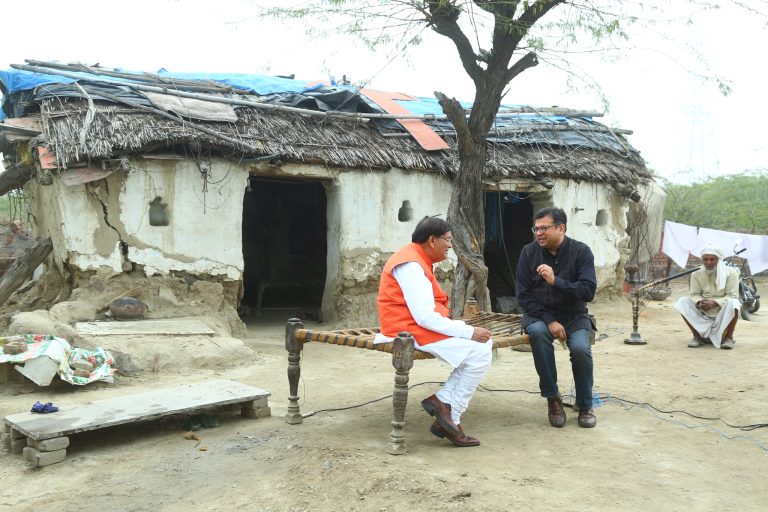
While most associate the work of Dr Pathak with sanitation and toilets, the Empowerment of women seems to be his primary intent. Most manual scavengers in India are women, the biggest beneficiary of Sulabh's work. Many of these retrained women now maintain modern Sulabh toilets, while others have set up small businesses after receiving various vocational training and support. Each woman I met at Sulabh's training centre in Alwar, Rajasthan, told an inspiring story of Empowerment through skills and mentoring.


In 2012 Dr Bindeshwar Pathak appeared before the Supreme Court of India to argue that widows should have the same inheritance rights as any other family member and that denying them this right perpetuates the discrimination and mistreatment they face in society. As a result, the Supreme Court ruled that widows should be treated as legal heirs and granted the right to inherit property. When I spoke with widows from India and Nepal in the ashrams of Vrindavan that are supported by Dr Pathak, I understood the difference he has made in their lives. In these ashrams, I saw how the law and justice can empower.


The Sulabh International School in Delhi provides marginalised students with an excellent education. Additionally, it is the centre of a vast network of sanitation clubs throughout India. It provides girls and boys with knowledge on menstrual hygiene, inexpensive sanitary napkin production, and incinerators for discarded sanitary napkins. Dr. Pathak's emphasis on education is crucial for genuine Empowerment, as education reduces power imbalances.


Dr Pathak's appointment of Mrs Usha Chaumar as Sulabh's president is perhaps one of his most remarkable acts of Empowerment. For her sanitation work, the same woman, excluded from upper-caste homes until a few years ago, received the Padma Shree award. She now travels the world delivering motivational talks.


I admire Dr Bindeshwar Pathak's journey, which combines science, spirituality, and Gandhian philosophy. In the 1970s, this changemaker introduced pay-per-use public toilets to India's impoverished, giving them dignity. Dr Pathak believed that the poor are prepared to pay for good services if designed to satisfy their needs and limits. Half a century later, in 2011, Abhijit Banerjee and Esther Duflo's bestseller "Poor Economics" presented the same essential argument and earned them the Nobel Prize in Economics in 2019.


In a power-hungry world, real-life examples of Empowerment are precious. We should capture them and celebrate them. Until next time!
Dr Sunoor Verma is an international development strategist. He has advised WHO, UNICEF, UNDP, UNHCR, HUG-Geneva and Cambridge University on Strategy, Leadership Communication, Advocacy and Resource Mobilization. He has curated dialogue and partnership initiatives with parliamentarians in Macedonia, Malaysia, Kosovo, Germany, Switzerland, Australia, and Nepal. More on his work is on www.sunoor.net


Published in The Himalayan Times on 2nd May 2023

© Sunoor, 2025