
Blogs
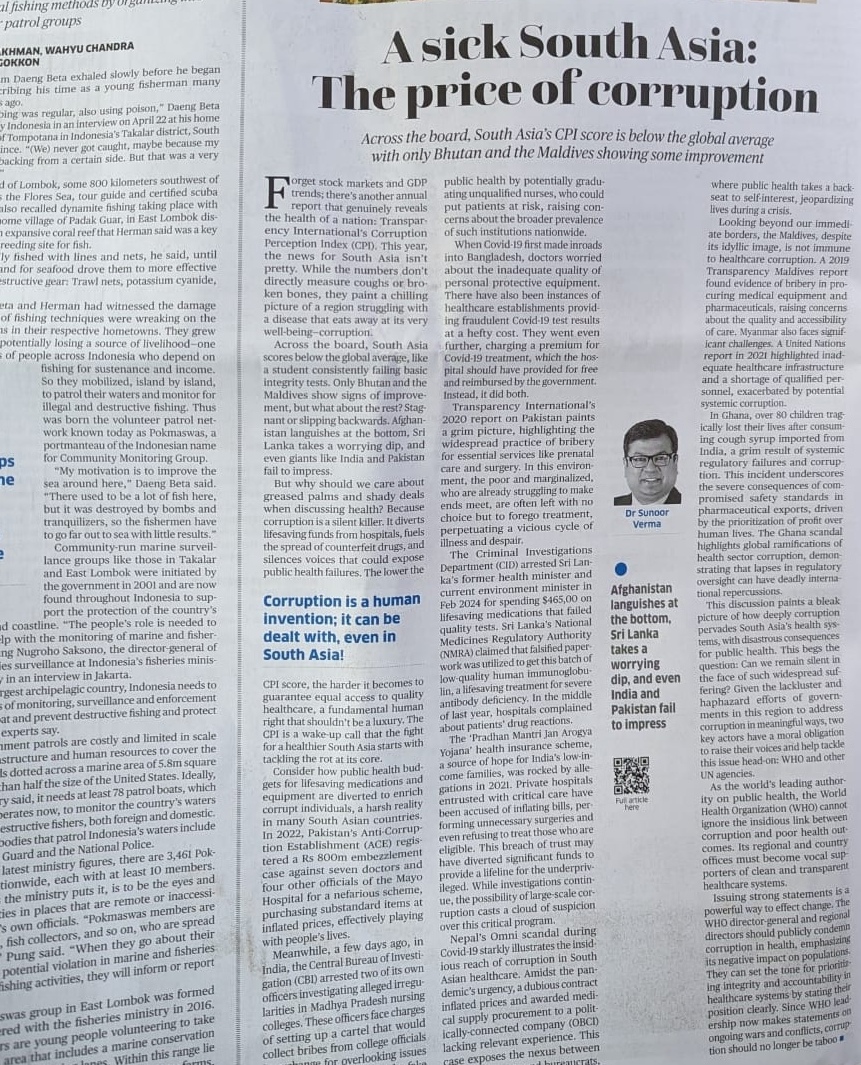
A sick South Asia: The price of corruption
Forget stock markets and GDP trends; there’s another annual report that genuinely reveals the health of a nation:
Corruption Perception Index (CPI). This year, the news for South Asia isn’t pretty. While the numbers don’t directly measure coughs or broken bones, they paint a chilling picture of a region struggling with a disease that eats away at its very well-being – corruption., like a student consistently failing basic integrity tests. Only show signs of improvement, but what about the rest? Stagnant or slipping backwards.
Consider how public health budgets for lifesaving medications and equipment are diverted to enrich corrupt individuals, a harsh reality in many South Asian countries. In 2022, Pakistan’s Anti-Corruption Establishment (ACE) registered a Rs 800 million embezzlement case against seven doctors and four other officials of the Mayo Hospital for a nefarious scheme, purchasing substandard items at inflated prices, effectively playing with people’s lives.
Meanwhile, a few days ago, in India, the Central Bureau of Investigation (CBI) arrested two of its own officers investigating alleged irregularities in Madhya Pradesh nursing colleges. These officers are accused of setting up a cartel that would collect bribes from college officials in exchange for overlooking issues and granting clean chits. The fake nursing college scandal in Madhya Pradesh, India, undermines public health by potentially graduating unqualified nurses who could put patients at risk, raising concerns about the broader prevalence of such institutions nationwide.
When COVID-19 first arrived in adjacent Bangladesh, doctors worried about the inadequate quality of personal protective equipment. There have also been instances of healthcare establishments providing fraudulent COVID-19 test results at a hefty cost. They went even further, charging a premium for Covid-19 treatment, which the hospital should have provided for free and reimbursed by the government. Instead, it did both.
2020 report on Pakistan paints a grim picture, highlighting the widespread practice of bribery for essential services like prenatal care and surgery. In this environment, the poor and marginalized, who are already struggling to make ends meet, are often left with no choice but to forego treatment, perpetuating a vicious cycle of illness and despair.
The Criminal Investigations Department (CID) arrested Sri Lanka’s former health minister and current environment minister in February 2024 for spending $465,00 on lifesaving medications that failed quality tests. Sri Lanka’s National Medicines Regulatory Authority (NMRA) claimed that falsified paperwork was utilized to get this batch of low-quality human immunoglobin, a lifesaving treatment for severe antibody deficiency. In the middle of last year, hospitals complained about patients’ drug reactions.
The ‘Pradhan Mantri Jan Arogya Yojana’ health insurance scheme, a source of hope for India’s low-income families, was rocked by allegations in 2021. Private hospitals entrusted with critical care have been accused of inflating bills, performing unnecessary surgeries, and even refusing to treat those who are eligible. This breach of trust may have diverted significant funds to provide a lifeline for the underprivileged. While investigations continue, the possibility of large-scale corruption casts a cloud of suspicion over this critical program.
Nepal’s Omni scandal during COVID-19 starkly illustrates the insidious reach of corruption in South Asian healthcare. Amidst the pandemic’s urgency, a dubious contract inflated prices and awarded medical supply procurement to a politically connected company (OBCI) lacking relevant experience. This case exposes the nexus between politics, business, and bureaucrats, where public health takes a backseat to self-interest, jeopardizing lives during a crisis.
Looking beyond our immediate borders, the Maldives, despite its idyllic image, is not immune to healthcare corruption. A 2019 Transparency Maldives report found evidence of bribery in procuring medical equipment and pharmaceuticals, raising concerns about the quality and accessibility of care. Similarly, Myanmar faces significant challenges. A United Nations report in 2021 highlighted inadequate healthcare infrastructure and a shortage of qualified personnel, exacerbated by potential systemic corruption.
In Ghana, over 80 children tragically lost their lives after consuming cough syrup imported from India, a grim result of systemic regulatory failures and corruption. This incident underscores the severe consequences of compromised safety standards in pharmaceutical exports, driven by the prioritization of profit over human lives. The Ghana scandal highlights the global ramifications of health sector corruption, demonstrating that lapses in regulatory oversight can have deadly international repercussions.
This discussion paints a bleak picture of how deeply corruption pervades South Asia’s health systems, with disastrous consequences for public health. This begs the question: can we remain silent in the face of such widespread suffering? Given the lacklustre and haphazard efforts of governments in this region to address corruption in meaningful ways, two key actors have a moral obligation to raise their voices and help tackle this issue head-on: WHO and UN agencies.
ambivalence on corruption and reluctance to highlight how privatization of health services harms public health outcomes has not helped either. The evidence for this correlation has long been available, but there has been no effective advocacy by the global custodian of health. South Asian lawmakers and their families frequently own private hospitals, medical colleges, nursing homes, and schools. It is clear where they would stand in the privatization of health debate.
should advocate, in particular, with those international finance institutions constantly pushing for lower public-sector health spending and see privatization as the first line of treatment for failing healthcare systems.
enters into three to five-year country cooperation agreements with host governments to outline the agreed-upon work plan. Corruption in the healthcare sector should be a vital component of this agreement with allocated funds. Without this, the #Afghanistan #Bhutan #Bangladesh #Maldives #Myanmar #Nepal #Pakistan #SriLanka #India #Corruption #Health #WHO #UN #South Asia #Transparency #GobalHealth #GlobalHealthDiplomacy
Holding leader's feet to the for women's empowerment
On International Women’s Day, leaders send hollow tweets, posts, and messages praising women’s empowerment. Cut through the noise and get to the point: are these leaders keeping their promises or faking them? When a male or female leader broadcasts a flowery message about women’s empowerment, ask them to answer my questions and then judge them. People say the proof is in the pudding.
Organizational leaders should report women’s representation across levels and answer why these percentages are low. Annual gender representation goals should be publicly posted. And feature in the annual corporate reports.
Act on wage equity instead of talking about it. Organizational leaders must disclose gender pay audits that identify and address discrepancies. Regulations like wage bands and standardized pay scales can reduce unconscious bias in compensation talks. Anything less is unacceptable.
Leaders must show they recruited diverse talent fairly and inclusively. Blind recruitment methods and diversity training for hiring managers prevent unconscious bias in the selection process. Furthermore, leaders should publicly state that they aggressively attract female leaders through focused recruitment.
Leaders must show they recruited diverse talent fairly and inclusively. Blind recruitment methods and diversity training for hiring managers prevent unconscious bias in the selection process. Furthermore, leaders should publicly state that they aggressively attract female leaders through focused recruitment.
Leaders who prioritize menstruation, nursing, and menopausal facilities show they understand and are committed to women’s unique challenges. Before offering free condoms in office restrooms, provide women’s hygiene products. Menstruation is not voluntary, but sex is!
Senior and sufficient women in any organizational redressal committee are essential for fair and successful workplace issue resolution. They are not just a matter of tokenism but a strategic need for workplace respect and accountability.
Ageing & travel: The policy-practice gap
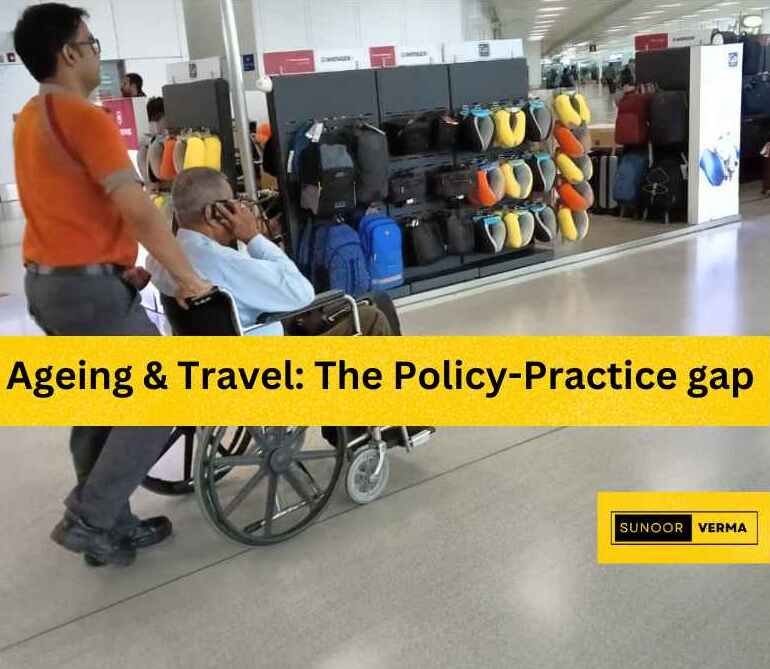
I had come to see off my eighty-four-year-old uncle, who\ uses a wheelchair at Kathmandu’s Tribhuvan International Airport. He was flying to New Delhi. We had chosen to fly him with India’s premier airline,\
Kathmandu airport has two business lounges – the one managed by Radisson Hotel is a twenty-odd-step climb on the first floor. There are no elevators. Soltee Hotel operates the second lounge, which is on the ground floor. While the airline had booked a wheelchair for my uncle, it invited him to the first-floor lounge as it only had an agreement with the Radisson lounge. Forty minutes of discussion with three staff levels later,
finally agreed to make an exception and allow him to the ground floor lounge. Had I not persevered, my uncle would have been denied using a lounge he was entitled to because of his #age and #disability.had not used the prism of disability and ageing when deciding to make an exclusive contract with one lounge, while other international airlines operating out of Kathmandu hedge their bets and let passengers choose a lounge.Making policies and guidelines on disability and #ageing requires complex-multidimensional #advocacy and leadership communication. Ideally, the organizations would have an ageing and #disability focal point that would be empowered enough to examine all client-facing decisions of the organization through the ageing and disability lens. The Human Resources heads need to ensure that in their induction programs, disability and ageing are featured in the curricula.
Clearly articulated leadership communication on a company’s commitment to creating inclusive products is a must and needs to be frequently repeated. There are, of course, trailblazers-
, has spoken publicly about his commitment to making Microsoft products and services accessible to everyone. He believes that people with disabilities can significantly contribute to the workplace. Similarly, , has said that her firm is committed to creating a culture of equality where everyone can advance and thrive and making its products and services accessible.Soon, more airlines and airport operators will realize the economic imperative of using the ageing lens in business decisions. predicts that the number of people aged 65 years and older will increase from 1 billion in 2020 to 1.6 billion in 2050. Similarly, the number of older adults who travel internationally will increase from 100 million in 2015 to 260 million in 2030.Growing up, I have known my uncle as a confident person whose wit and swift decision-making always got him out of any tight spot. He has been a sportsman for the better part of his life. However, with age, I see irreversible changes which make airports and flights a challenge, especially when travelling alone.#Airports can be large and complex, with long distances, confusing signage, and crowds. Elderly passengers may have difficulty finding their way around, especially if unfamiliar with the airport. Trust in the person pushing your wheelchair is critical for not getting an anxiety attack. A pleasant surprise was the Special Assistance staff at Delhi’s IGIA airport. The gentleman pushing the wheelchair was experienced in dealing with elderly passengers and showed patience and compassion at every stage of the journey. This highlights the importance of appropriately recruiting and training staff dealing with elderly passengers.It is important to note that the needs of elderly passengers can vary depending on their circumstances. Airports and Airlines should be prepared to work with elderly passengers to identify and address their individual needs and train their staff to deal with elderly passengers. This includes training on how to identify and address the needs of elderly passengers and provide them with the best possible service.both recognize the importance of travel for older adults. Travel can allow older adults to stay active, learn new things, and connect with loved ones. However, it is crucial for older adults to be aware of the challenges they may face when travelling and to take steps to mitigate those risks.There are several things that older adults can do to prepare for travel, including:
Navigating menopause at work: A vital conversation
The gap between the global South and the global North is widening in mainstreaming #menstruation in public discourse. Conversations about menstruation are only now emerging from the shadows of stigma and taboo in many parts of the global South. It is still difficult for people in these areas to access menstrual hygiene products, adequate sanitation facilities, and menstrual education. For example, Women and girls in sub-Saharan Africa and South Asia often resort to using inadequate materials like rags, leaves, or even cow dung to deal with their periods. Health problems, missed days of work or school, and feelings of isolation worsen when people aren’t given the tools they need to succeed.
The global North has made progress in normalizing menstruation. Many North American and European countries encourage menstruation discussions in homes, schools, and the workplace. The UK and several European countries have menstrual leave rules that allow workers to take paid absence for severe period symptoms. People in the US are fighting to end the “pink tax” on period goods, and more companies are discussing menstrual health with their staff. Development, access to resources, and cultural attitudes about menstruation contribute to this North-South gap, emphasizing the need for global menstrual health and hygiene fairness.The global North has made progress in normalizing menstruation. Many North American and European countries encourage menstruation discussions in homes, schools, and the workplace. The UK and several European countries have menstrual leave rules that allow workers to take paid absence for severe period symptoms. People in the US are fighting to end the “pink tax” on period goods, and more companies are discussing menstrual health with their staff. Development, access to resources, and cultural attitudes about menstruation contribute to this North-South gap, emphasizing the need for global menstrual health and hygiene fairness.
The global North has made progress in normalizing menstruation. Many North American and European countries encourage menstruation discussions in homes, schools, and the workplace. The UK and several European countries have menstrual leave rules that allow workers to take paid absence for severe period symptoms. People in the US are fighting to end the “pink tax” on period goods, and more companies are discussing menstrual health with their staff. Development, access to resources, and cultural attitudes about menstruation contribute to this North-South gap, emphasizing the need for global menstrual health and hygiene fairness.
The global North has made progress in normalizing menstruation. Many North American and European countries encourage menstruation discussions in homes, schools, and the workplace. The UK and several European countries have menstrual leave rules that allow workers to take paid absence for severe period symptoms. People in the US are fighting to end the “pink tax” on period goods, and more companies are discussing menstrual health with their staff. Development, access to resources, and cultural attitudes about menstruation contribute to this North-South gap, emphasizing the need for global menstrual health and hygiene fairness.
Over the last two to three years, the global South vs. global North debate has rekindled. While disagreements over trade, intellectual property and nuclear energy will continue, the least we can do is to bridge the menstruation gap between the global North and global South. The increasing number of women parliamentarians in South Asia will hopefully help address the gap in the menstruation discourse.